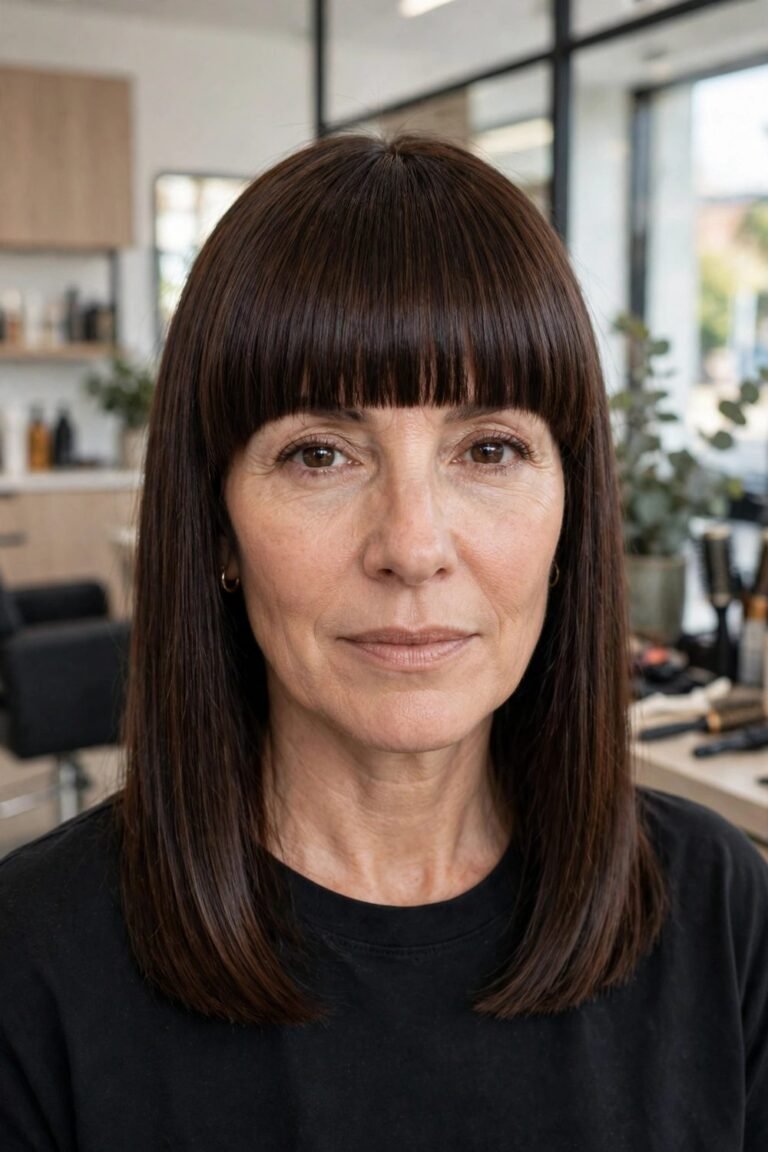
13 Hairstyles That Disguise A Widening Parting Over 50
You catch sight of yourself in the mirror and your eyes go straight to one spot. The line down the middle of your hair looks wider than it used to, and it is the first thing you notice before anything else. What you really want is simple. You want to look in the mirror and see your hairstyle first, not your parting.
The good news is that a parting is not fixed. Hair can be cut and styled so the line is covered, broken up, or moved to a place where it looks much softer. These hairstyles that disguise a widening parting over 50 use simple tricks like a deeper side part, a light fringe, and layers at the crown. None of them need much time in the morning, and none of them ask you to fight with your hair.
Start with the style that feels closest to the hair you already have. A small change in where the hair falls can make a big difference to how the top of your head looks, and your stylist can fine tune the cut at your next visit.
1. Pixie Cut With A Swept Over Top
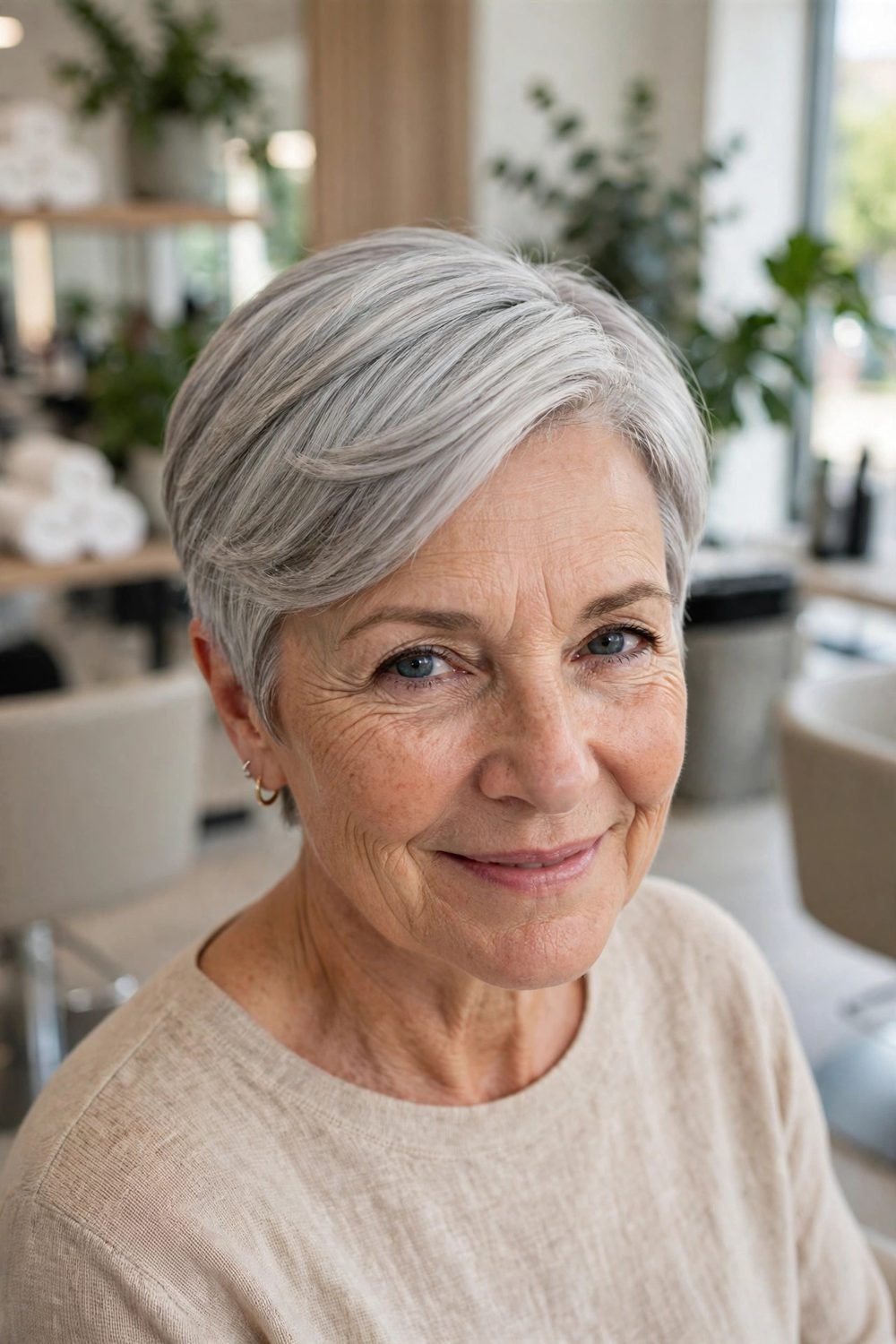
One smooth sweep of hair across the crown is all a pixie needs.
Ask your stylist to leave the top long enough to comb over from one side. The hair lies flat across the parting area, so there is no open line on show at all. Keep the sides neat and a little shorter, which makes the top look fuller by contrast. In the morning, comb the top over while it is damp, then let it dry in place. A light touch of mousse at the roots is plenty. This cut suits fine hair well because short lengths never drag the top down.
✂️
The Cut
Longer top with neat, shorter sides
↪️
The Sweep
Hair combs over and covers the crown
⏰
The Morning
Comb it over while damp and go
2. Zigzag Part With Soft Chin Length Layers
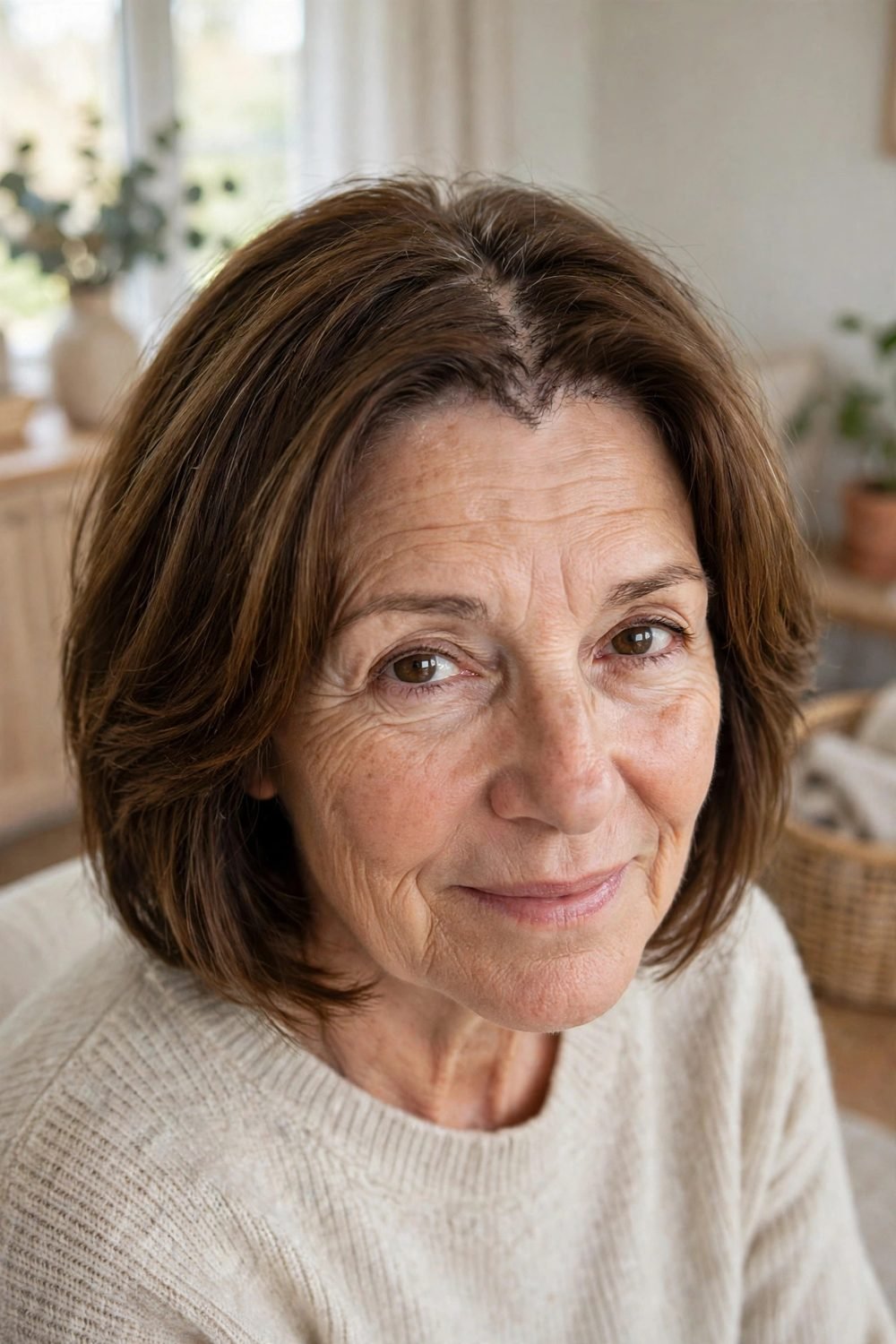
A zigzag line breaks the parting into small, soft dashes.
Instead of one clean line down the middle, the hair is parted in a gentle zigzag, so the scalp shows only in tiny dashes. It works well on chin length hair with soft layers that fall over each point of the zigzag. Use the tail of a comb to draw the shape while your hair is damp, then dry it in place. The shape holds through the day and looks natural, never drawn on. If one spot feels too open, nudge a few strands across it with your fingers.
Quick Tip
Draw the zigzag a little wider at the front and softer at the crown, so it looks like the hair simply fell that way on its own.
3. Classic Bob With A Full Soft Fringe
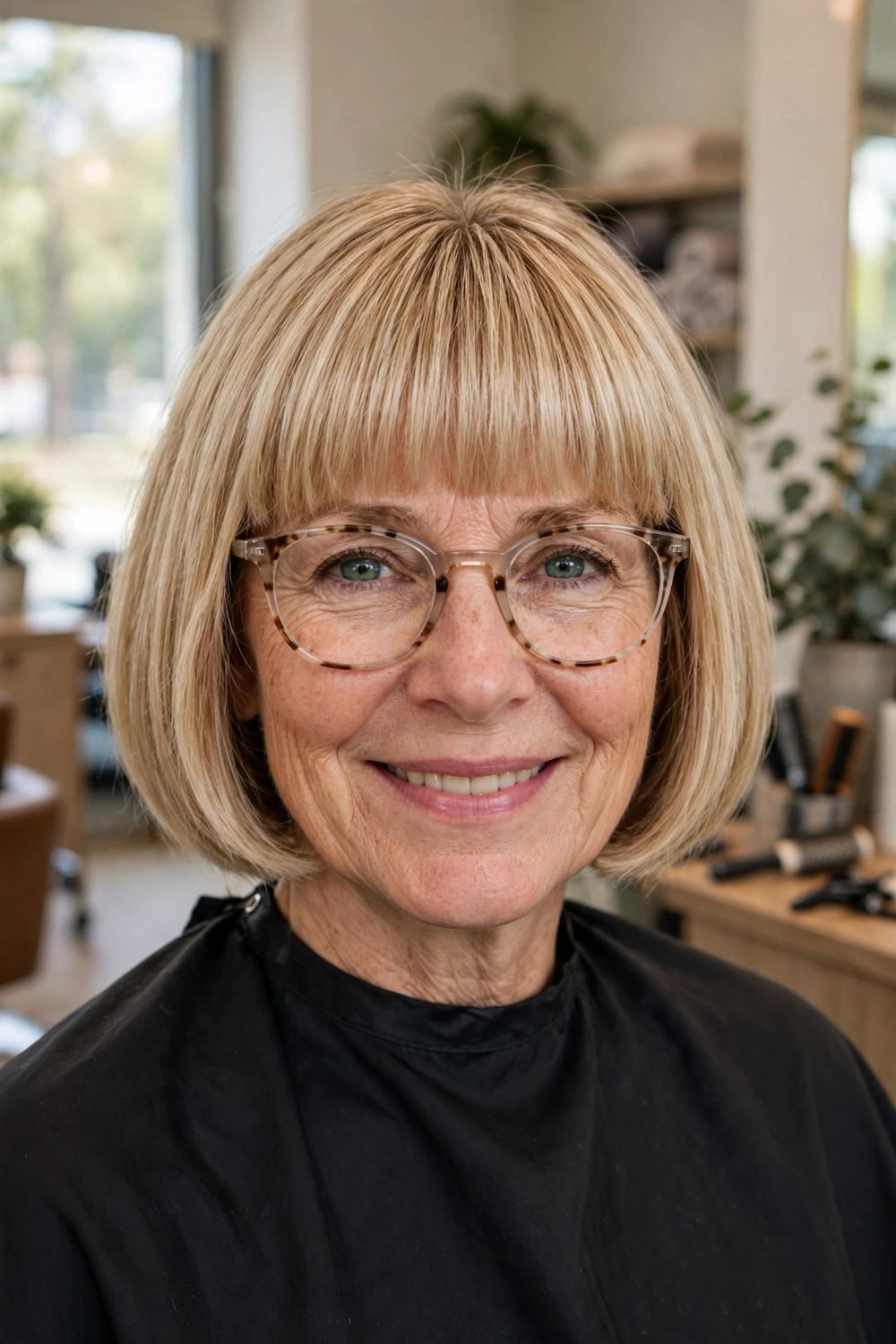
With a fringe in place, the front of the parting stays out of sight.
With a classic bob, the fringe is cut from further back on the crown, so the hair that forms it covers the front section of the part line. Ask for a soft, full fringe that you can wear straight across or pushed a little to one side. The bob itself can sit at chin or jaw length with clean ends that make the hair look thicker. Blow dry the fringe forward from the roots, and let the rest fall smooth. This is a kind style for glasses wearers too, since the fringe can be trimmed to sit neatly above the frames.
💇
The Fringe
Cut from further back on the crown
📏
The Length
Chin or jaw level with clean ends
🌬️
The Drying
Fringe blown forward from the roots
4. Layered Lob With Lift At The Crown
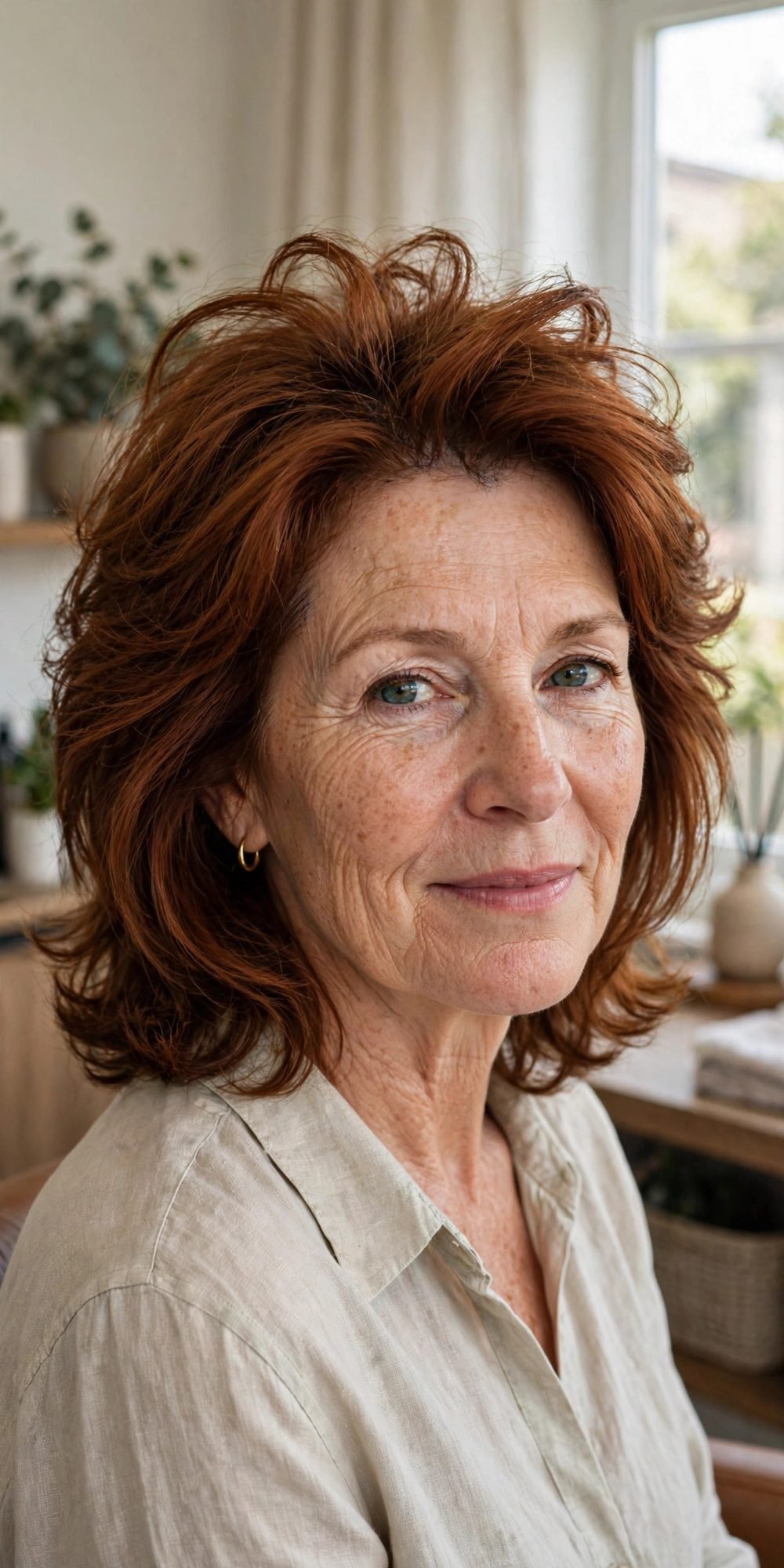
Long layers at the crown stand up a little instead of lying flat.
A lob that rests on the shoulders gives you length, while short layers through the top stop the hair from parting in one flat sheet. Ask your stylist to layer the crown area only, and to keep the lower lengths fairly full. Dry the top in the opposite direction to the way it wants to fall, then flip it back. That small trick lifts the roots and closes the gap along the part line. A round brush helps, but fingers work fine on busy mornings.
Ask Your Stylist
✅ Layers through the crown area only
✅ Lower lengths kept fairly full
✅ A quick lesson in drying the top upward
✅ A trim booked before the layers grow flat
5. Feathered Crop Styled Forward
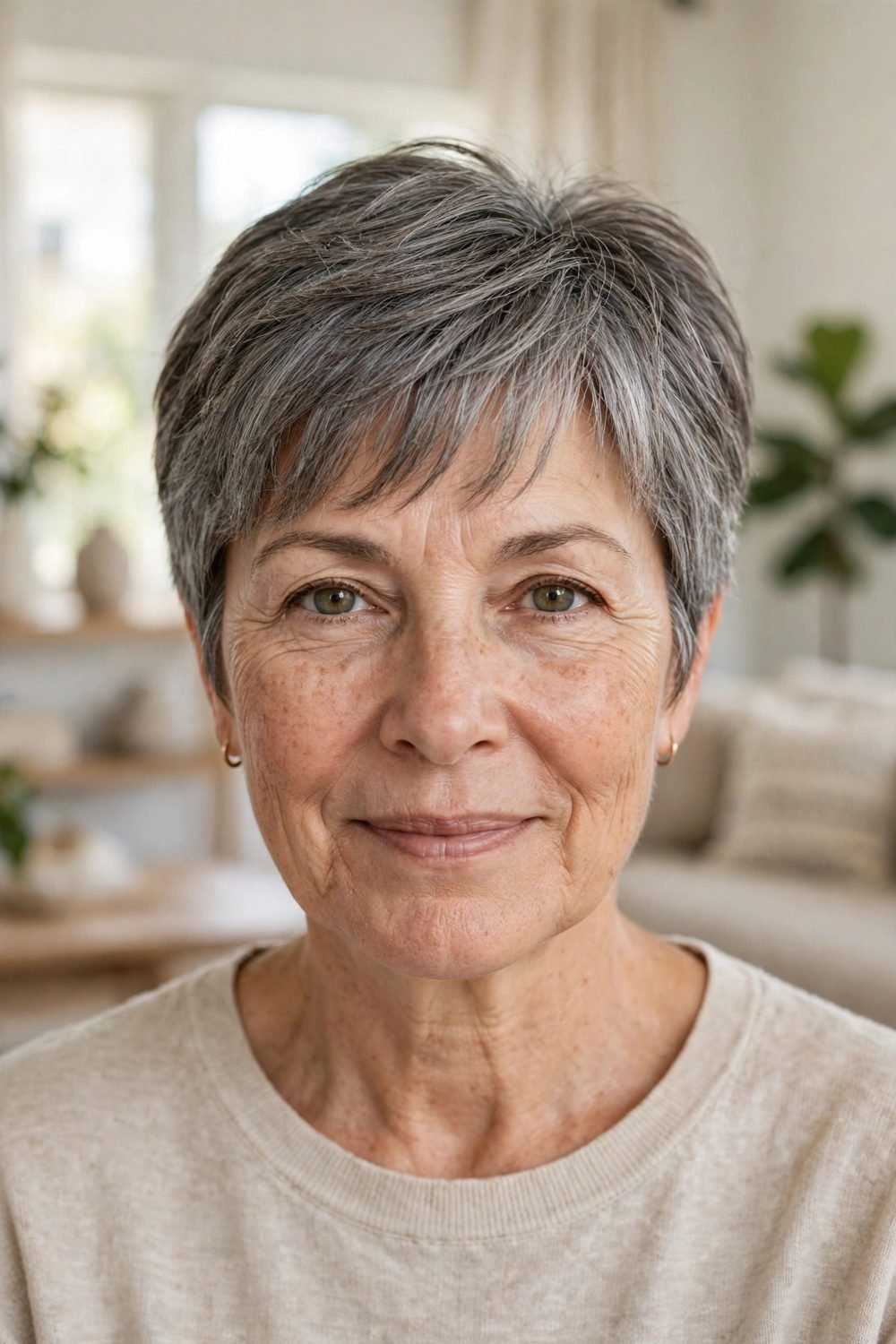
When hair is styled forward, there is no part line left to see.
This short crop is cut so the hair grows and falls toward the face, and you style it the same way. The crown hair moves forward over the parting area and covers it in soft feathered pieces. Ask for texture through the top and a light fringe that blends into the sides. To style, work a pea sized amount of cream through damp hair and push everything forward with your fingers. Let it air dry or use a dryer on a low heat. The finish is soft and relaxed, and it grows out kindly between cuts.
➡️
The Direction
Everything styled forward, every day
🪶
The Texture
Feathered pieces soften the crown
✋
The Styling
Fingers only, no brush needed
6. Blunt Bob With Side Swept Bangs
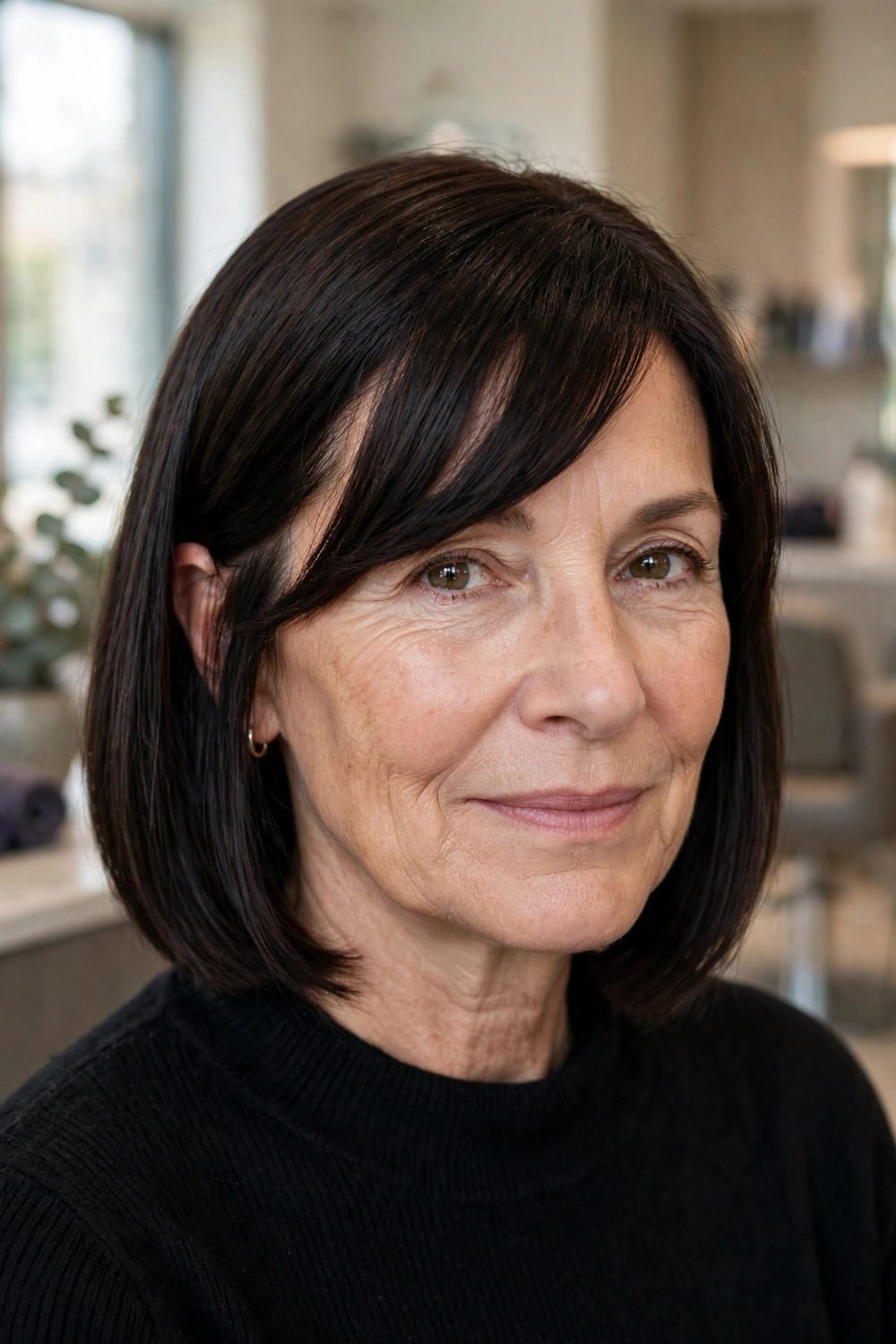
A long side swept fringe crosses the parting and hides its widest point.
The blunt bob keeps the ends thick, which always makes fine hair look fuller. The fringe is cut long and swept across the forehead from a side part, so it lies over the area where the parting tends to open up. Ask your stylist to start the fringe a little further back than usual, so it has enough weight to stay in place. Tuck the smaller side behind one ear for a neat finish. This shape suits straight and slightly wavy hair, and it looks polished with very little effort each morning.
Three Morning Steps
1. Part the hair low on one side while it is damp.
2. Sweep the long fringe across your forehead and smooth it down.
3. Tuck the lighter side behind one ear and you are done.
7. Shag Cut Dried Forward From The Crown
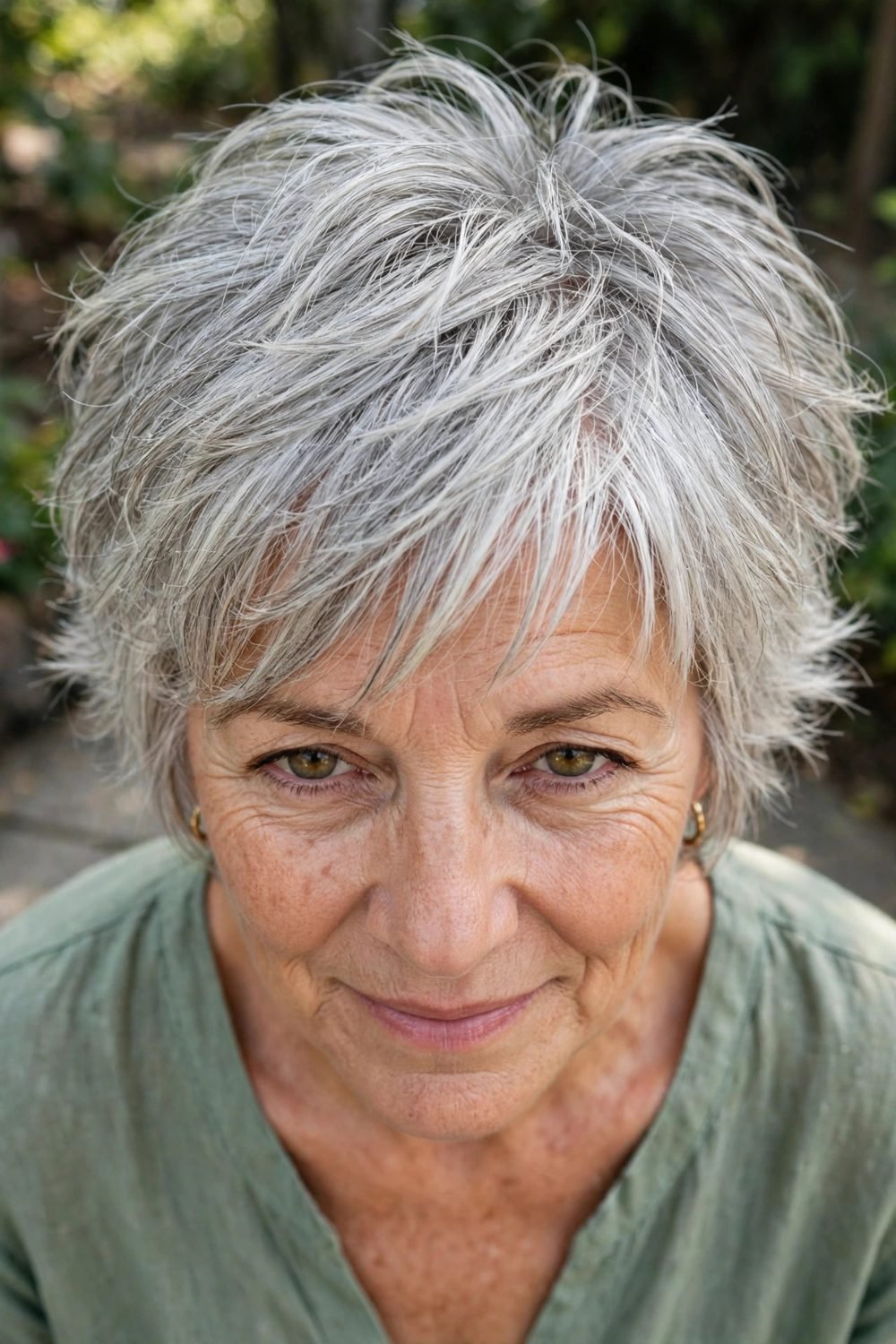
A soft shag has so many layers that no single line can form.
The shag is built from layers of different lengths, and that broken up shape is exactly what a widening parting needs. The trick sits in the drying. Instead of drying the hair back or down, push the crown hair forward and dry it that way, then shake it out with your fingers. The layers fall in mixed directions and the part line disappears into the texture. Ask for layers that start high on the crown and soften toward the ends. Natural wave loves this cut, but straight hair wears it well too.
🌊
The Layers
Mixed lengths break up every line
💨
The Drying
Crown hair pushed and dried forward
🤲
The Finish
Shaken out with fingers, never combed flat
8. Loose Waves With A Broken Up Part Line
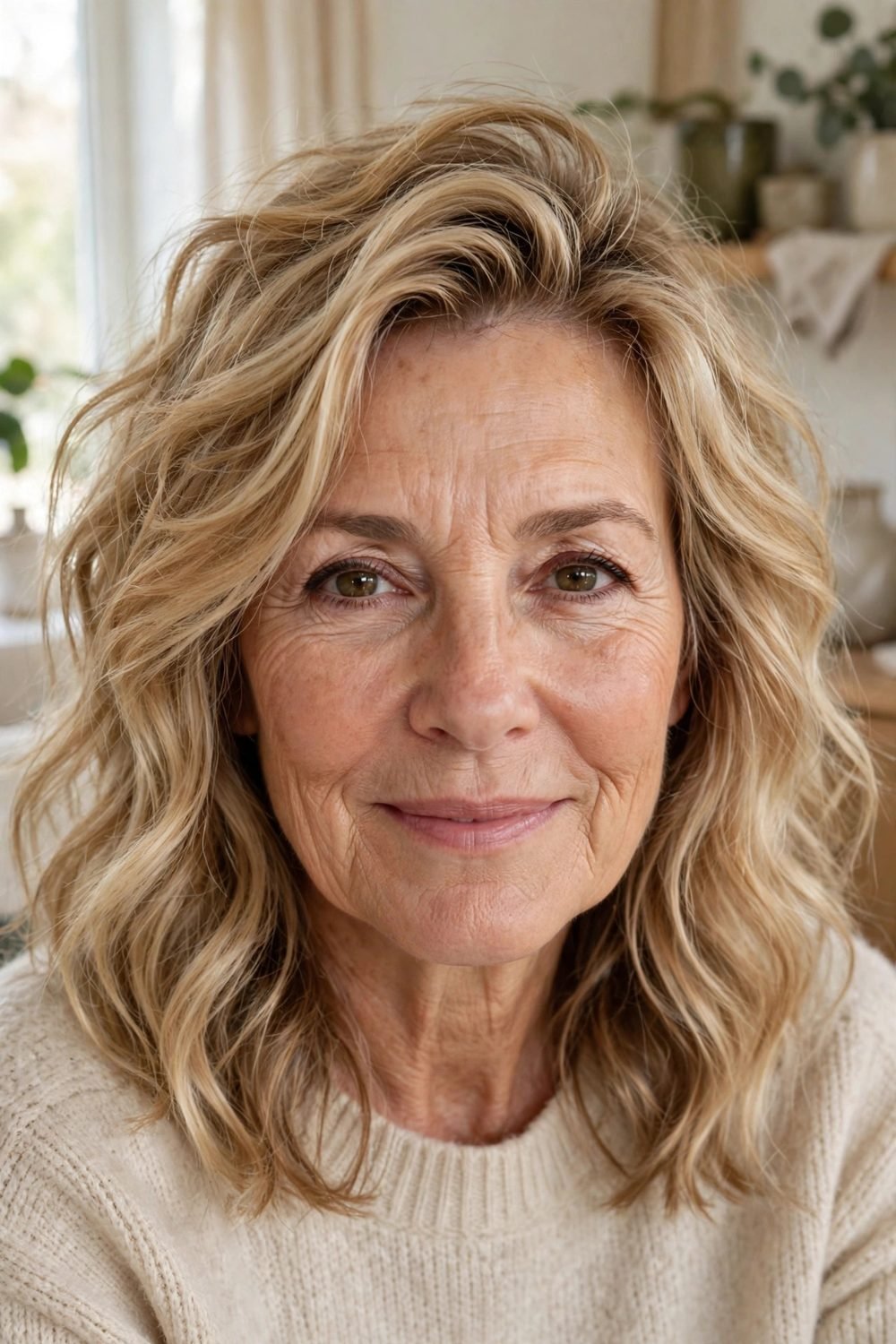
Loose waves bend the hair in curves, so a straight part line cannot show.
Wave is a kind friend to a widening parting because curved hair covers more ground than straight hair. Keep the length around the shoulders and add long layers so the waves sit light rather than heavy. Make the waves with a wide barrel tong, or braid damp hair before bed and undo it in the morning. Then shake the hair out and push the top into a soft, uneven line with your fingers. Never comb a neat line back in. The slightly undone finish is what hides the scalp along the part.
| Hair Finish | What It Does To The Part Line |
|---|---|
| Straight and sleek | Lies flat and shows the line clearly |
| Loose and wavy | Curves over the line and softens it |
9. Fine Highlights Placed Around The Part Line
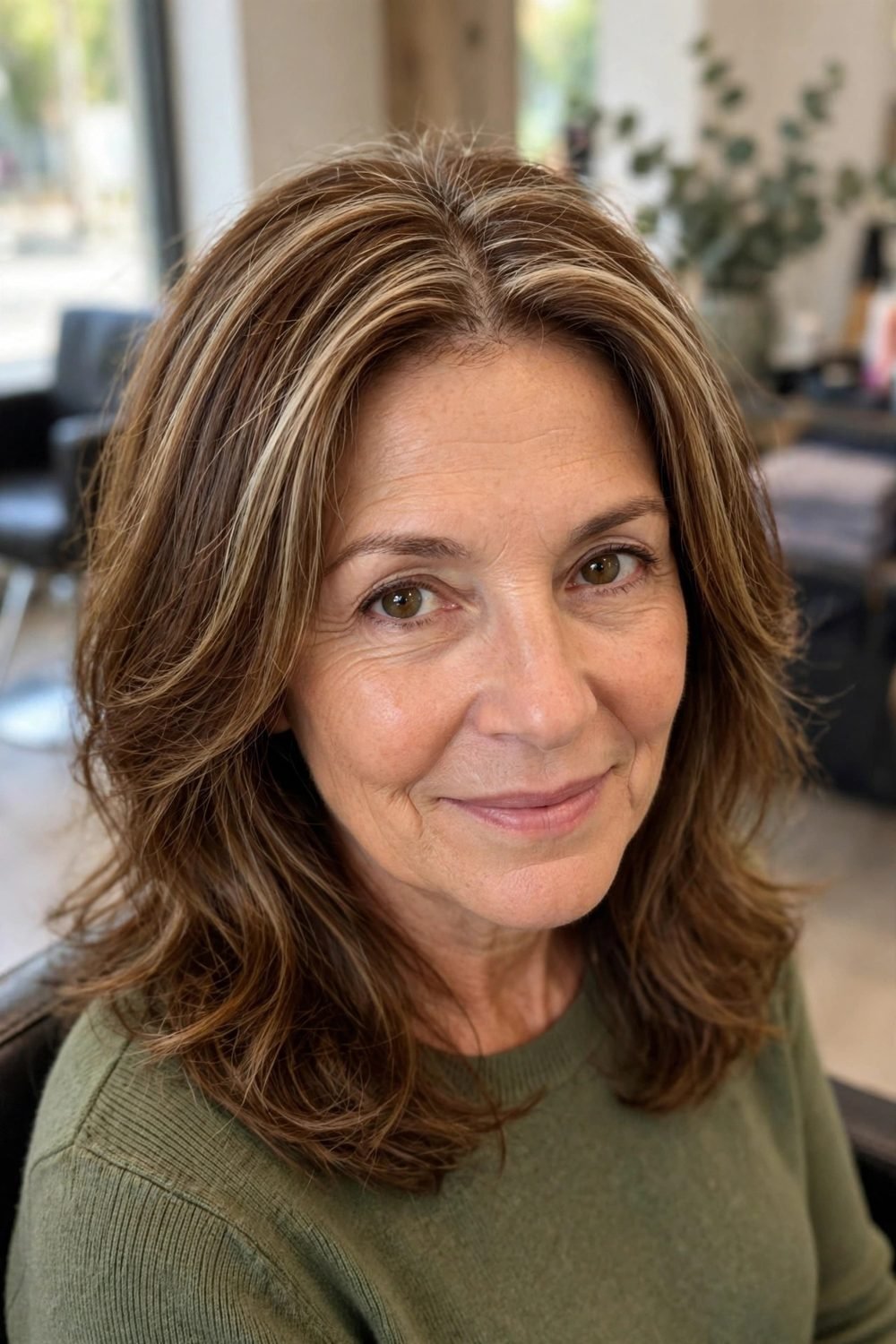
Lighter pieces around the part line soften the contrast that makes it stand out.
A widening part often looks stronger because pale scalp sits against darker hair. Fine highlights woven around the part line bring the two tones closer, so the line becomes much less obvious. Ask your colorist for soft, fine pieces through the top rather than bold stripes, and keep them close to your own base shade. The lighter pieces also give the look of depth, which makes the top of the hair seem fuller. Highlights grow out softly, so upkeep stays gentle, and this trick works with almost any cut on this list.
🎨
The Placement
Fine pieces woven through the top
🌗
The Contrast
Hair and scalp tones sit closer together
🗓️
The Upkeep
Soft grow out means gentle salon visits
10. Stacked Bob With A Low Side Part
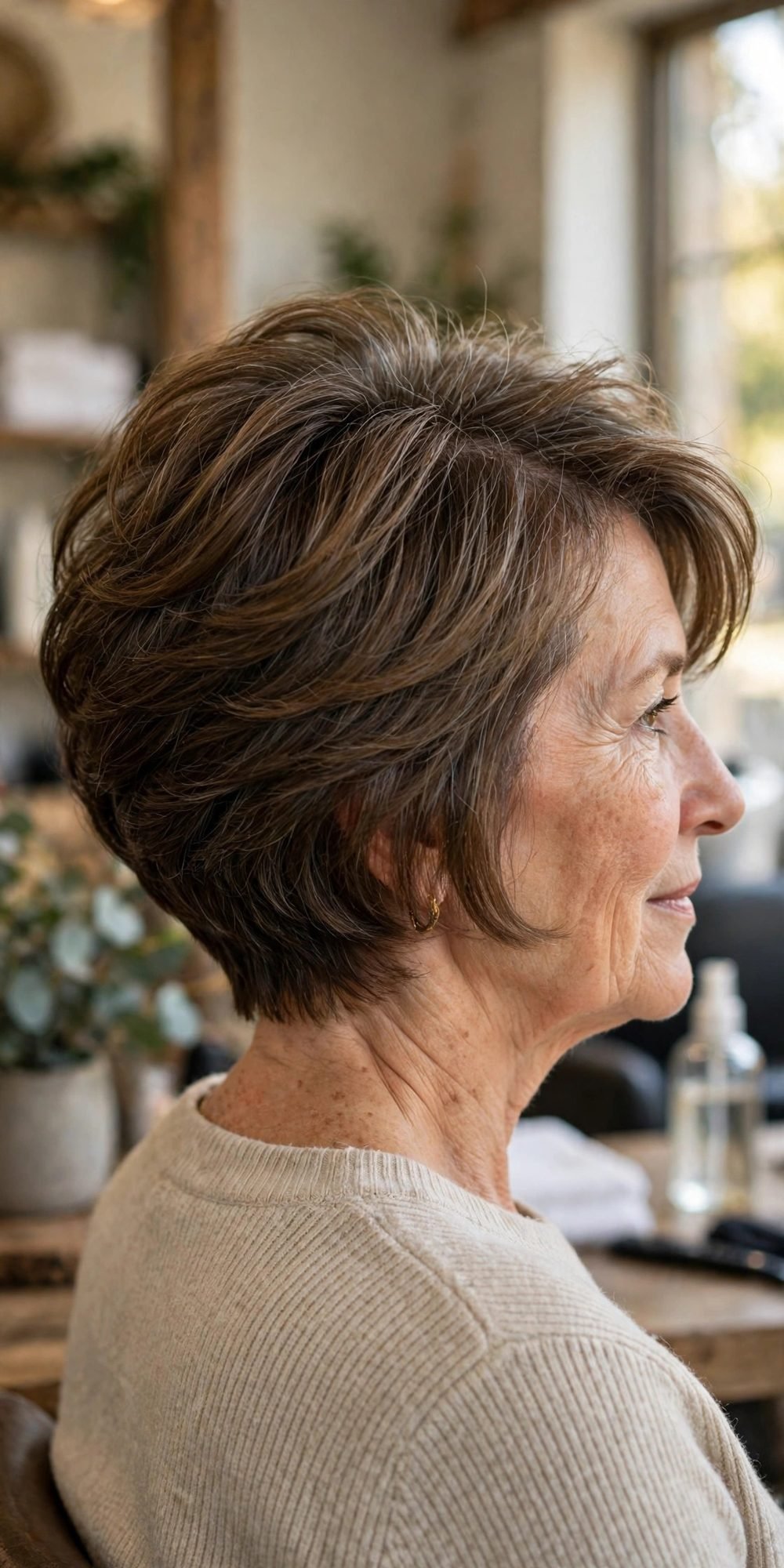
A low side part moves the line to where your hair is still thick.
Most of us part our hair in the same place for years, and that line takes the most wear. Moving the part down low on one side places the line over hair that is usually fuller at the side of the head. The stacked back of this bob adds shape and lift, so the top never lies flat. Train the new part over the first week by drying the hair in its new direction while it is damp. It may lift a little at first, but it soon settles and stays put through the day.
⚠️ Take Care
Move the part a little at a time if the new line keeps lifting. A part moved too far in one day can spring back and puff up at the roots, so give it a few days to learn its new place.
11. Tossed Crop With No Fixed Part
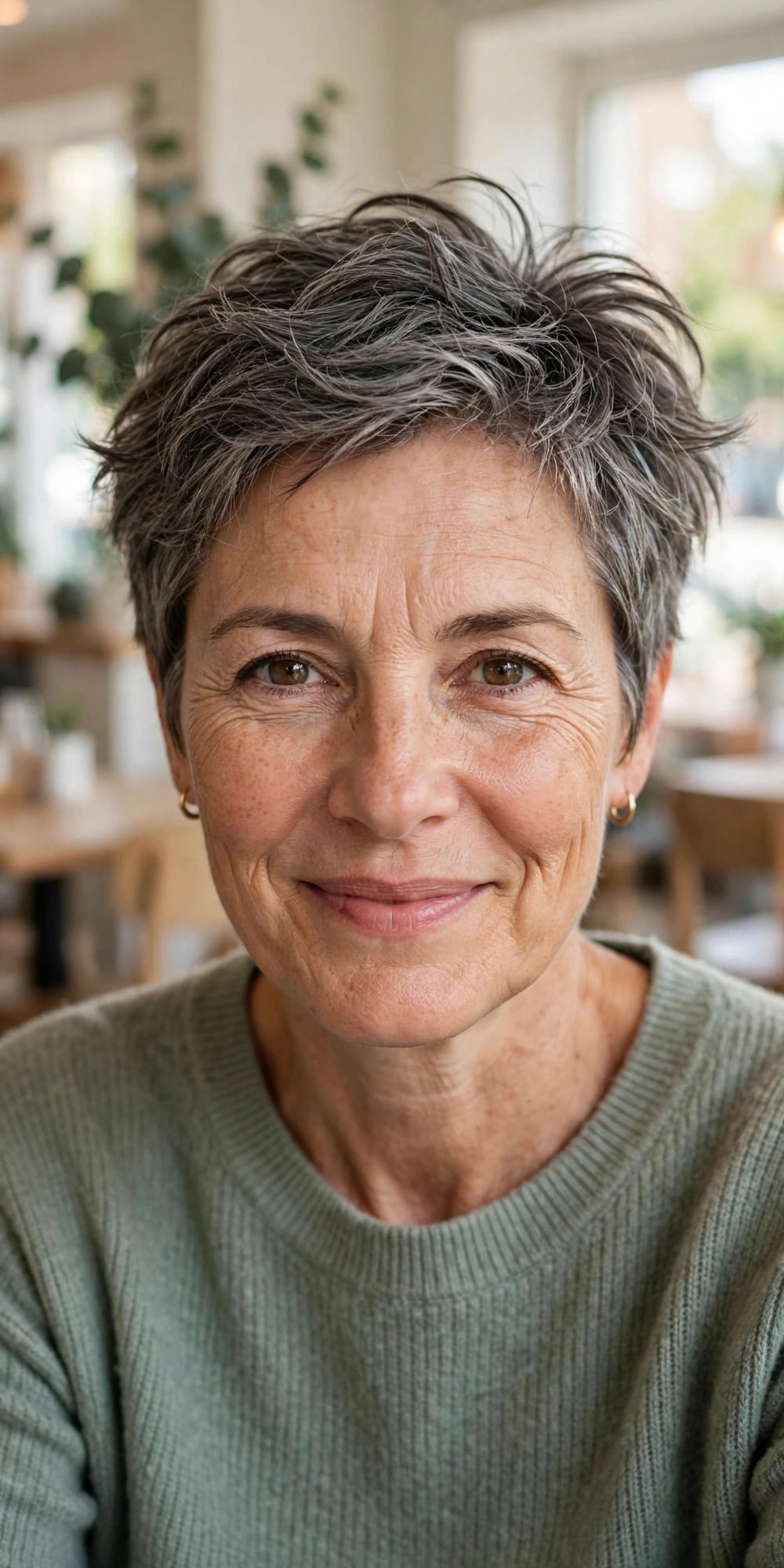
No fixed part at all means no wide line anywhere on the crown.
This playful crop is cut evenly through the top so the hair can be worn in any direction. Each morning you simply push it a different way, forward, to the left, or to the right, and the crown never shows a settled line. Ask for choppy texture and soft edges so the finish stays light and never looks harsh. It is a kind choice if your parting seems to change with the light, since the hair never sits in one place long enough to open up. Styling takes about a minute with a small dab of cream worked through with your fingertips.
🔀
The Direction
Changes from day to day, on purpose
✂️
The Cut
Even length with choppy texture
⏱️
The Time
Styled in about a minute each morning
12. Hairstyles That Disguise A Widening Parting Over 50 With A Deep Side Sweep
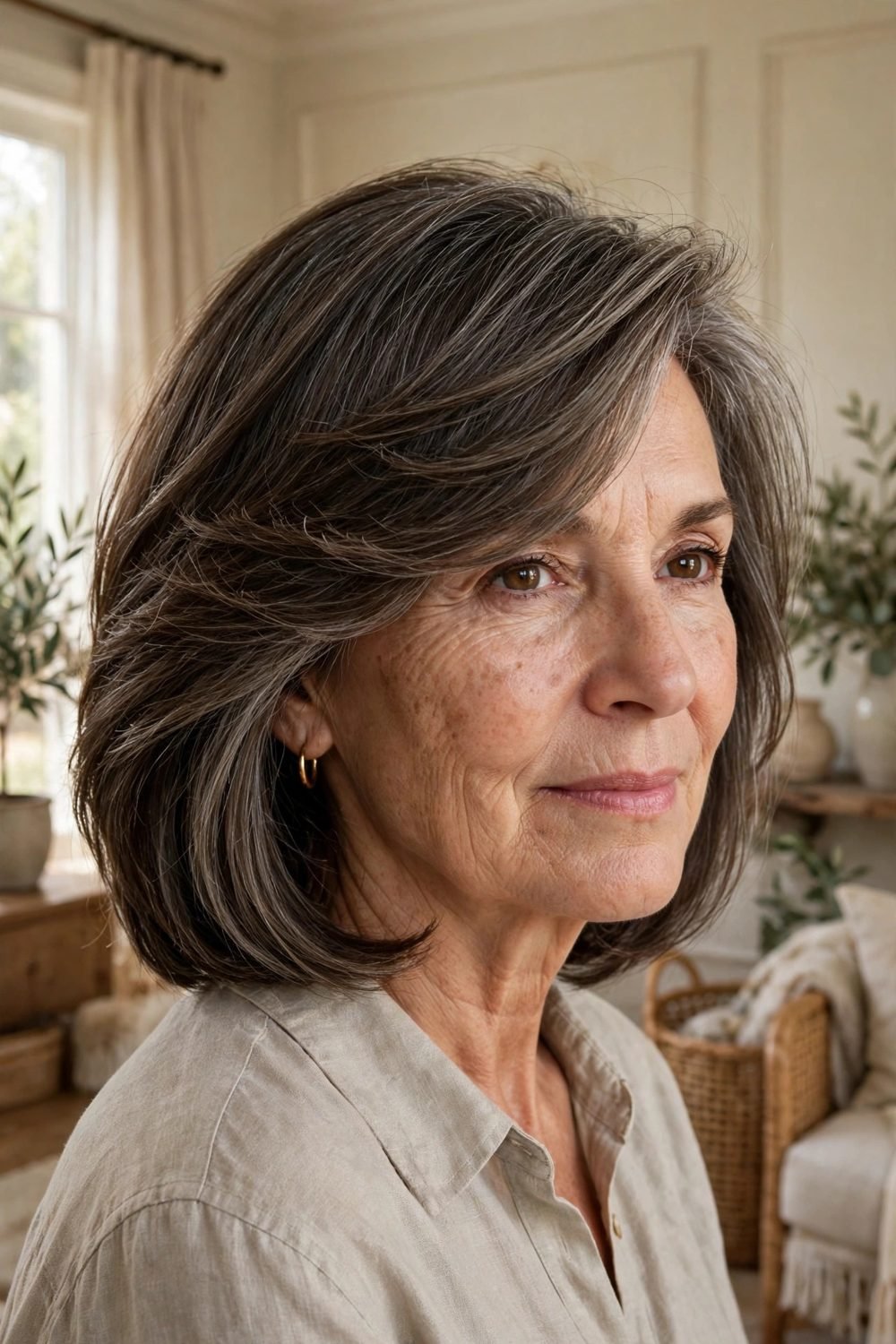
A deep side sweep sends a full curtain of hair across the whole crown.
This is the strongest trick on the list. The hair is parted low on one side and swept right across the top, so the parting area rests under a thick layer of hair. It works on shoulder length hair and on longer bobs alike. Ask for long layers so the sweep moves as one soft piece, and dry the roots in the direction of the sweep before anything else. A small side clip can hold the hair in place while it cools. The look stays calm and classic, and the crown stays covered all day.
Quick Tip
Let the roots cool fully before you touch the sweep. Cooled roots hold their direction far longer than warm ones, so the cover stays in place.
13. Asymmetric Bob With A Diagonal Fringe
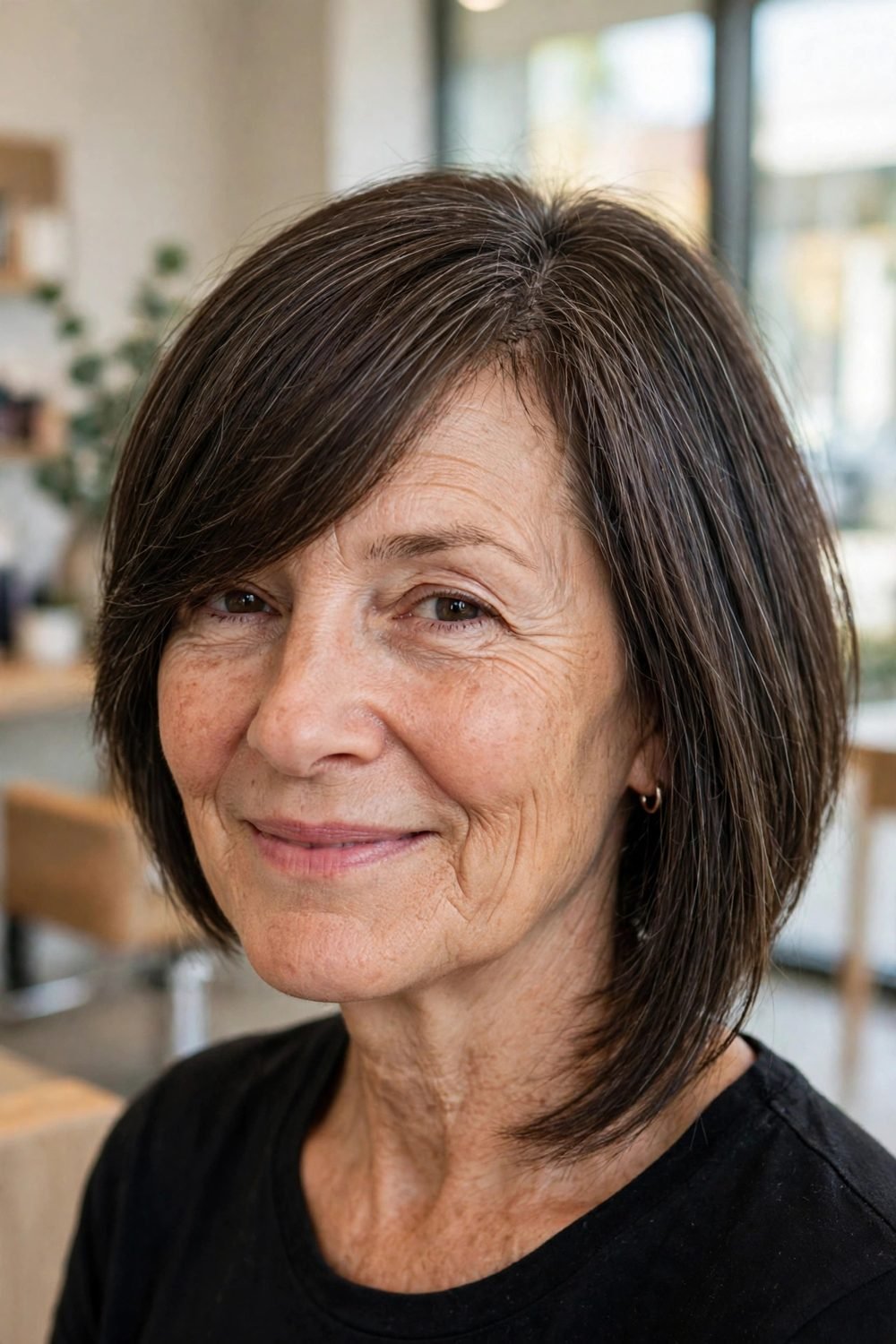
A diagonal line draws the eye across the hair, away from the parting.
One side of this bob is a little longer than the other, and the fringe falls on a soft diagonal. Your eye follows those angled lines instead of settling on the top of the head. Ask your stylist to keep the difference between the sides gentle, and to put the longer side over the side where your parting looks widest, so the extra length covers it. The back stays neat and simple. This cut holds its shape well and needs only a quick brush through in the morning.
Ask Your Stylist
✅ Longer side placed over the wider part
✅ Only a gentle difference between the sides
✅ Fringe falling on a soft diagonal
✅ Back kept neat and simple
Final Thoughts
A wider parting does not have to be the first thing you see in the morning. A moved part, a kind fringe, or a few layers at the crown can cover the line and give your hair a fresh shape at the same time. Pick the one style here that feels most like you, and show it to your stylist at your next visit. If you found a favorite, save this pin so it is ready on your phone when you sit down in the salon chair.