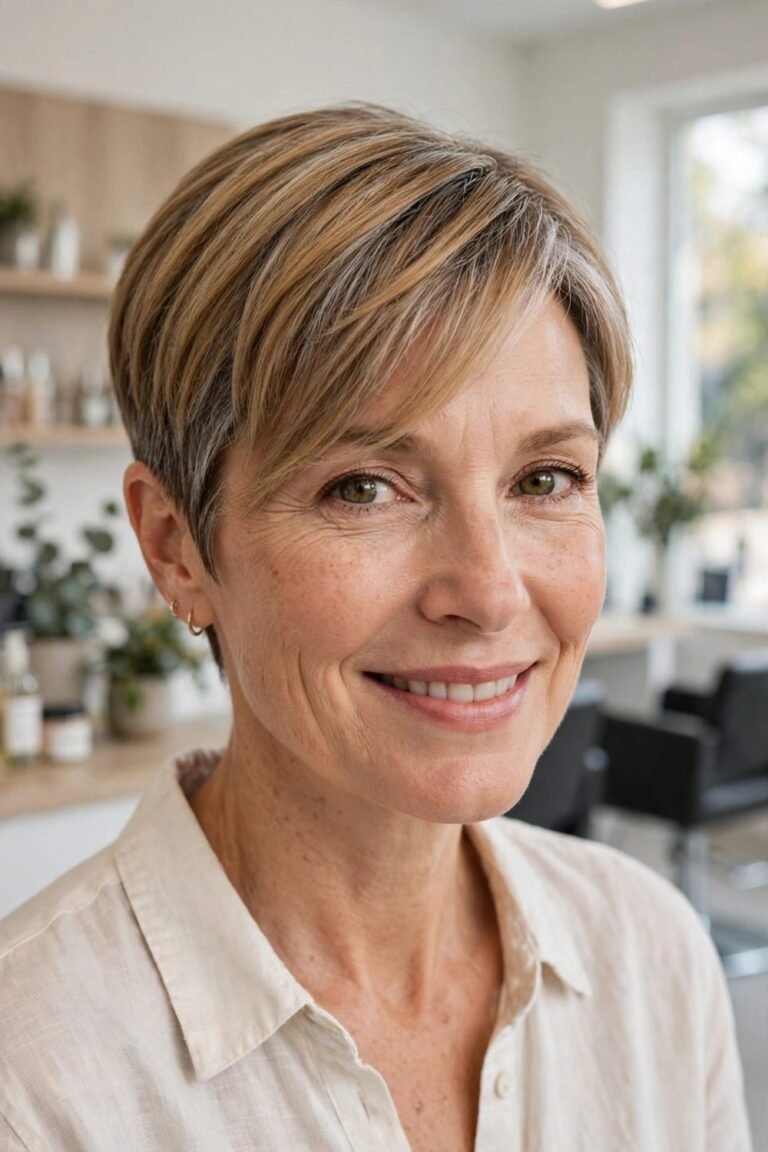
21 Layered Short Haircuts Over 60 That Move Instead Of Sitting Flat
Flat hair has a way of making the whole face look tired.
Many women over 60 tell their stylist the same thing. The cut looked fine in the salon, then fell flat by the next morning. The length was not the problem. The shape was. Hair often gets finer with age, and a short cut with no layers sits in one solid block. It has nothing to lift it and nowhere to go.
That is why layered short haircuts over 60 work so well. Short layers remove weight in the right places, add lift at the roots, and let each strand move on its own. The result is hair that swings when you turn your head, holds a shape through a busy day, and still looks soft at supper time. Below are 21 distinct cuts, each with a clear reason to choose it and a simple way to ask for it at the salon.
1. Feathered Pixie With Long Top Layers
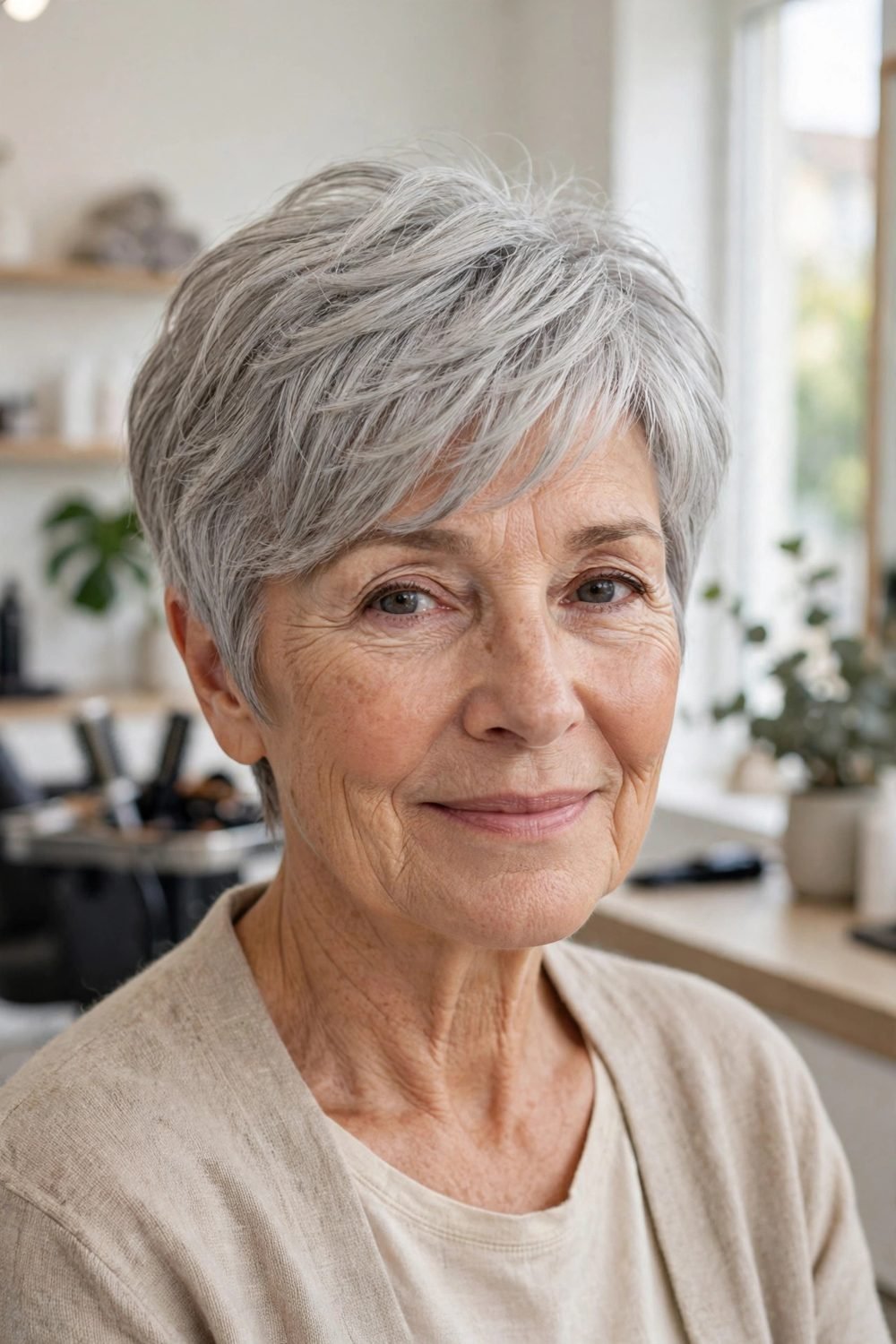
Feathering is the oldest trick for movement, and it still works.
The sides and back stay short and neat, while the top keeps longer pieces that are cut into soft, wispy points. Those points overlap like shingles, so the top lifts instead of lying in one flat sheet. Ask for the ends to be point cut, not blunt. A blunt edge on fine hair over 60 tends to look heavy and shows every gap. Blow dry the top forward, then push it back with your fingers. The layers fall into place and keep a little bounce as they settle.
2. Layered Bob With A Stacked Back
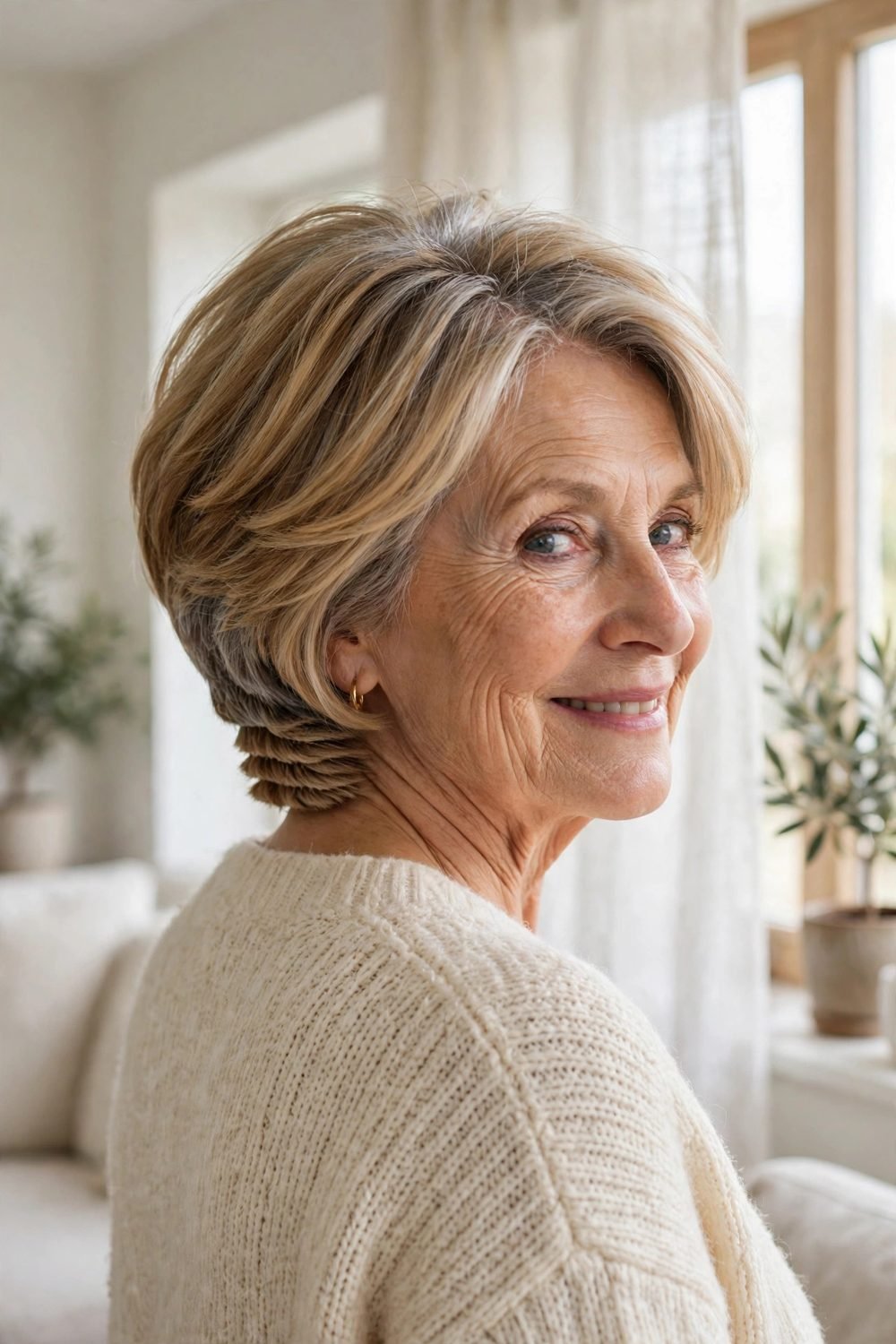
The back does the lifting in this bob.
Short graduated layers are stacked at the back of the head, building a gentle shelf of volume right where flat hair needs it most. The sides stay a bit longer and skim the jaw, so the shape still feels like a bob and not a pixie. This suits women who want polish for church, lunch with friends, and photos with the grandkids. Keep the stacking soft. Hard, shelf like steps look dated. Soft stacking looks like natural fullness, and it grows out kindly between appointments.
💡 Quick Tip
Show your stylist a side photo, not just a front photo. The stacked back is the whole point of this cut, and it only shows from the side.
3. Choppy Pixie With Broken Edges
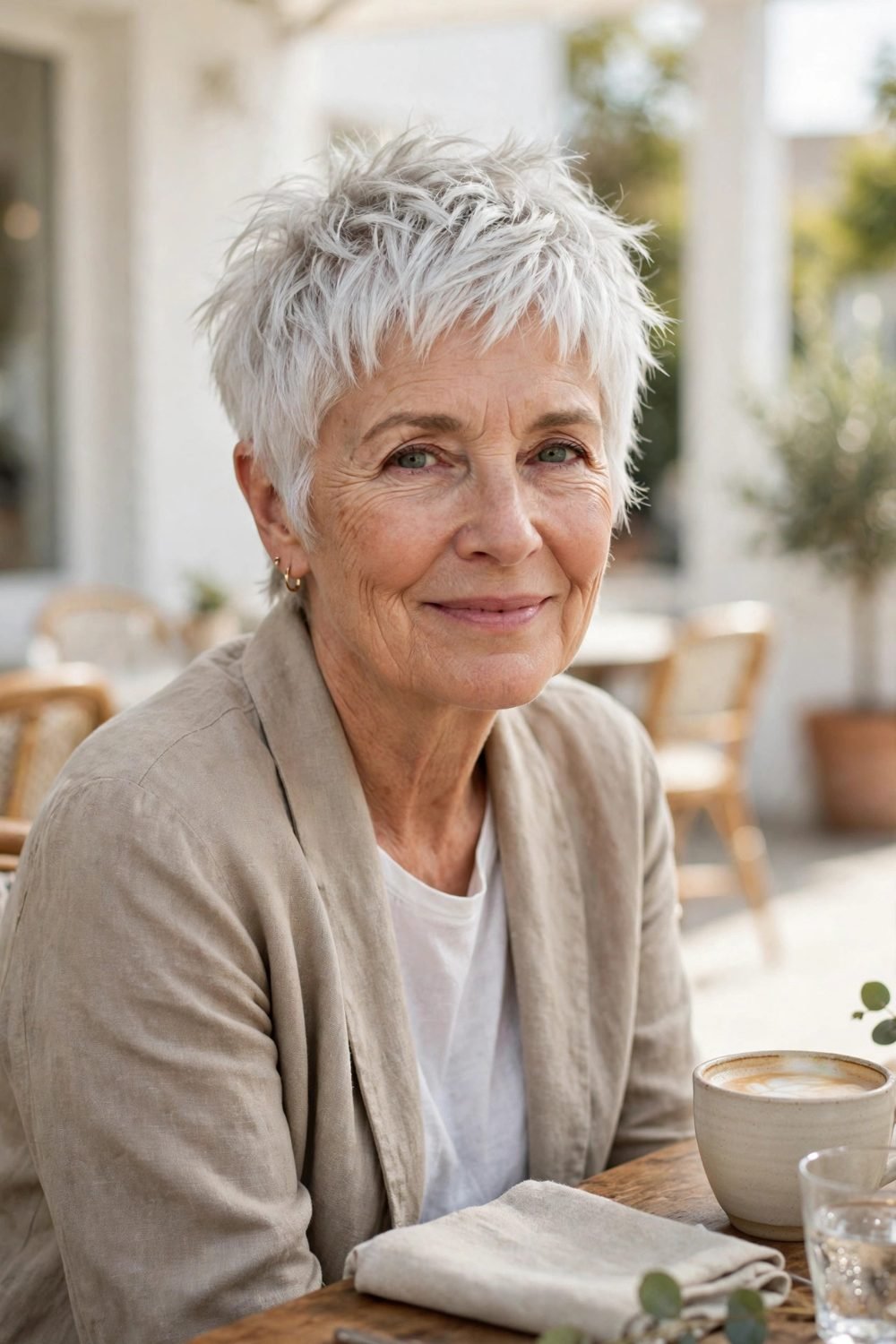
Blunt edges sit still. Broken edges move.
This pixie is cut with uneven, choppy layers all over, so no two pieces end at the same point. That broken line stops the hair from forming one flat cap. It also hides thinning at the part, because the eye cannot follow a straight line through it. Work a pea size amount of matte paste through dry hair and pinch a few pieces at the front. The mess is the style here, so a rushed morning is not a problem. It forgives cowlicks better than most short cuts.
One length pixie lies in a smooth cap. The part looks wide and the crown looks thin.
Choppy layers break the line up. Pieces point in different ways and the crown reads fuller.
4. Soft Layered Crop With Side Swept Bangs
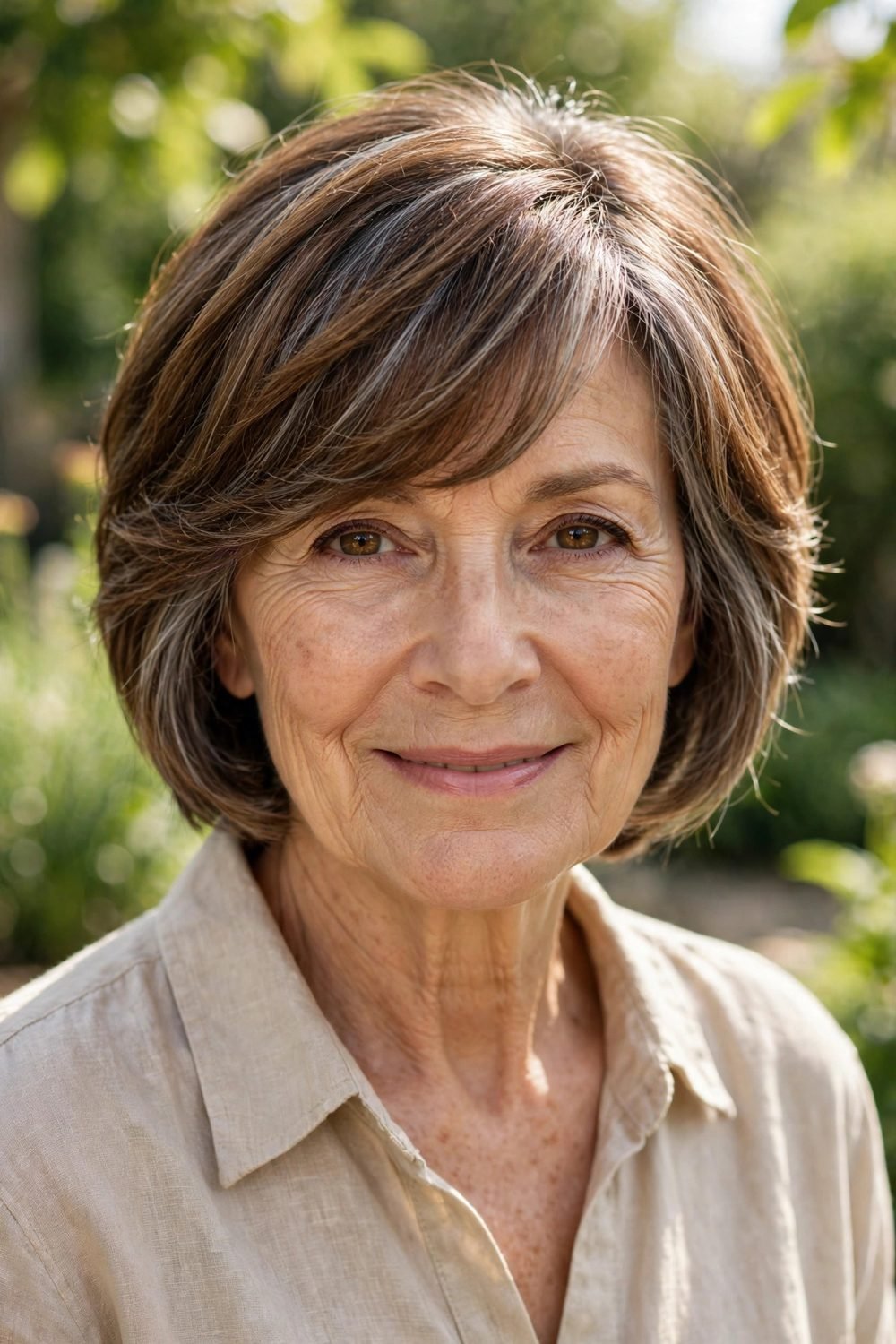
A side sweep gives short hair a direction, and direction reads as movement.
The crop is layered lightly all over, and the front is left long enough to sweep across the forehead and tuck near the cheek. That diagonal line softens forehead lines and draws the eye sideways instead of down, which helps a face look lifted. Keep the bangs wispy at the ends, not thick and blunt. Thick bangs on fine hair steal volume from the top. Dry the bangs first, while they are wet, or they will split at the part and refuse to stay put later.
Dry the bangs first, brushing them side to side while the dryer runs.
Lift the crown with a small round brush for just ten seconds of warm air.
Sweep the front across and let the ends rest soft, with no hard spray.
5. Textured French Bob With Short Crown Layers
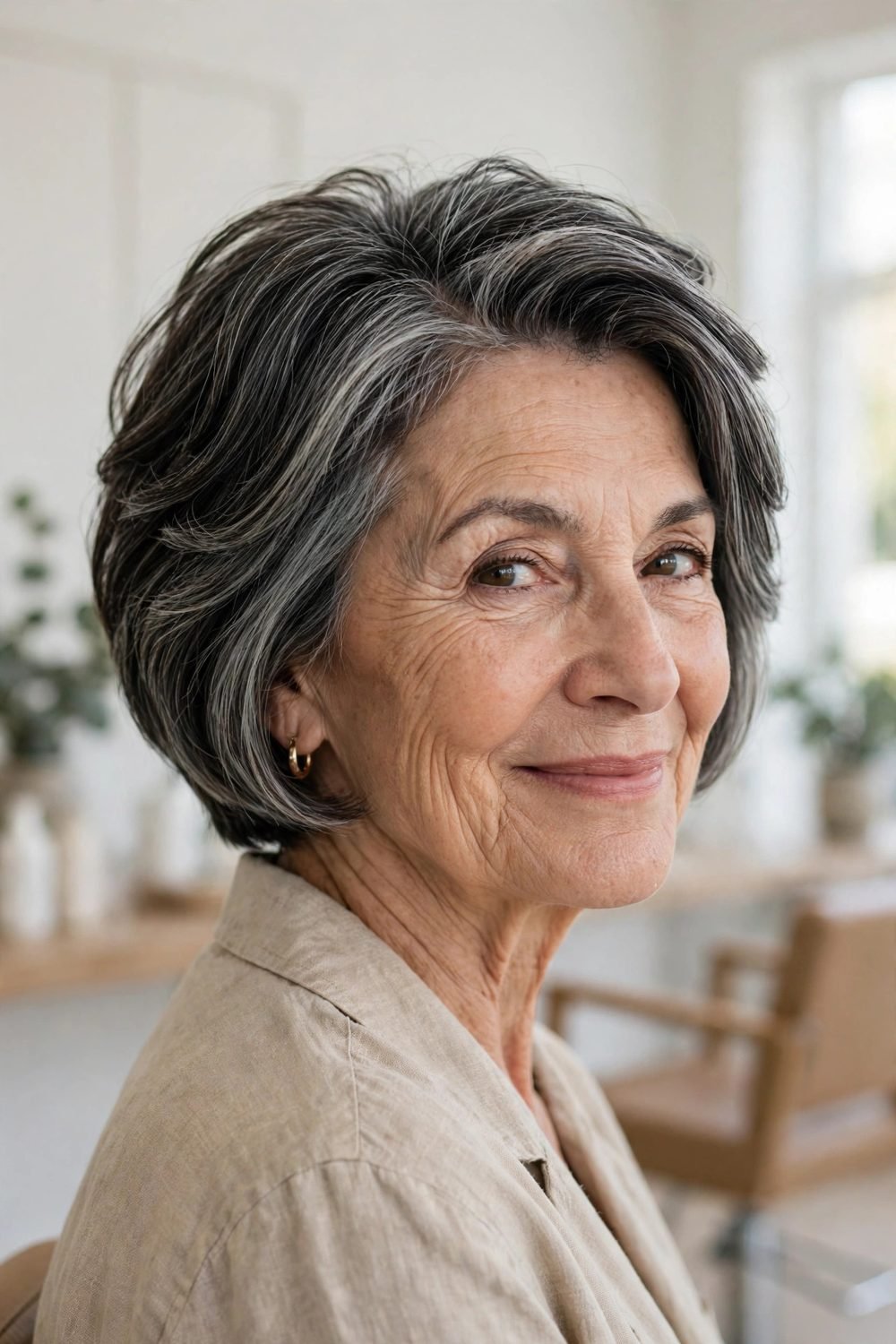
Shorter at the crown, this bob does not collapse at the top.
A French bob usually ends near the jaw and has a neat, blunt base. Adding short layers through the crown changes the whole feel. The top gains lift, the base keeps its clean line, and the two together give swing when you walk. It suits straight to slightly wavy hair best. Ask for the base to stay one finger above the shoulder so it does not flip out on coat collars in winter. A centre or soft side part both work with this shape.
Keep layers in the crown only, so the base stays strong.
Let the ends end above the shoulder for clean swing.
Layers all the way through the ends, which can look thin.
A heavy fringe that eats up the crown volume.
6. Tapered Layered Crop With A Clean Nape
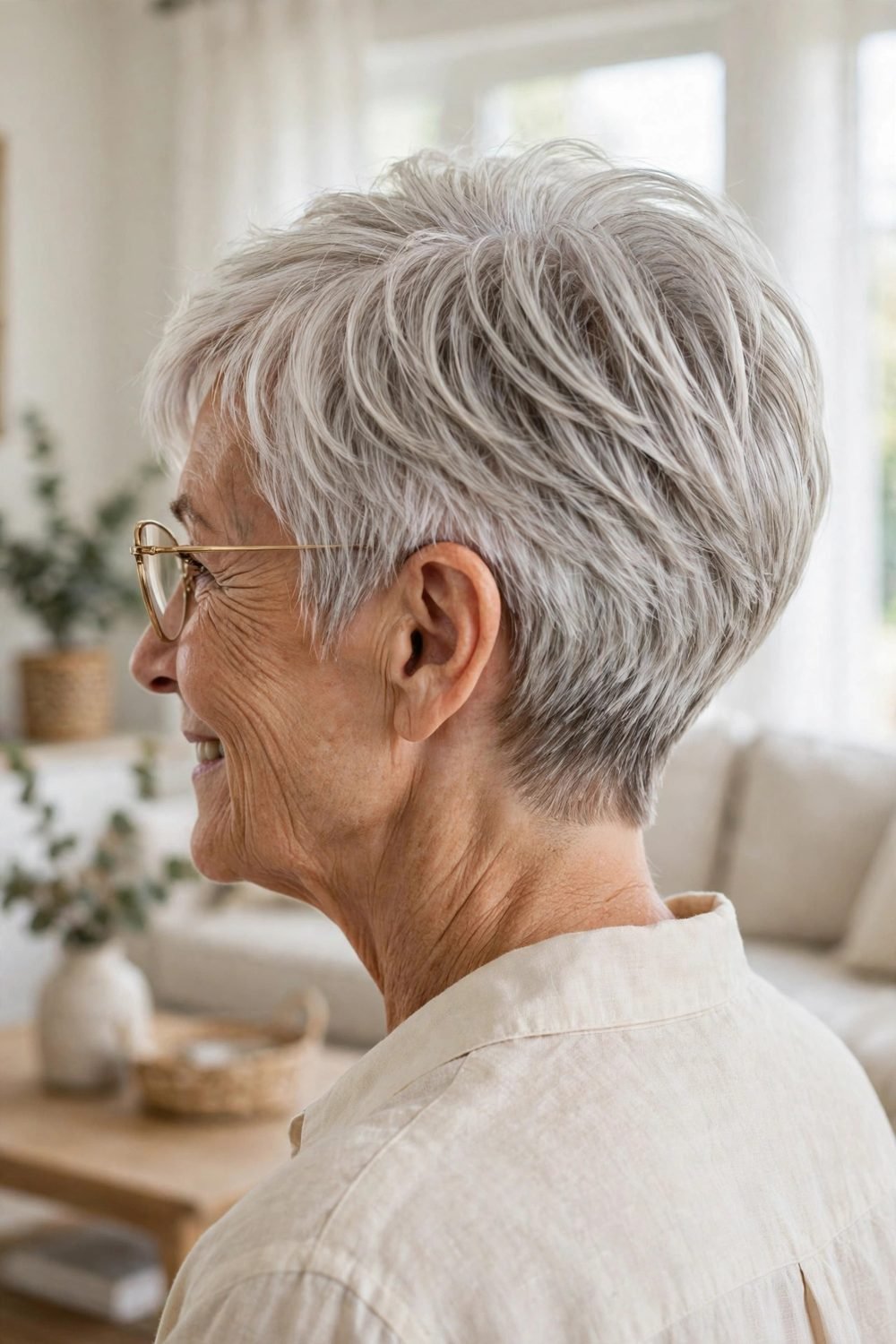
The nape can make or break a short cut.
When the back edge is left thick, it pushes out and looks like a shelf. Tapering layers at the nape lets the hair lie close and neat, while longer layered pieces on top keep the height and movement. This is a good choice for women who wear glasses, because the sides can be cut to sit clean over the ears with no bulk fighting the arms of the frames. It also stays tidy for weeks, since the fastest growing part starts out the shortest.
Tell your stylist these three things
7. Wispy Layered Pixie For Very Fine Hair
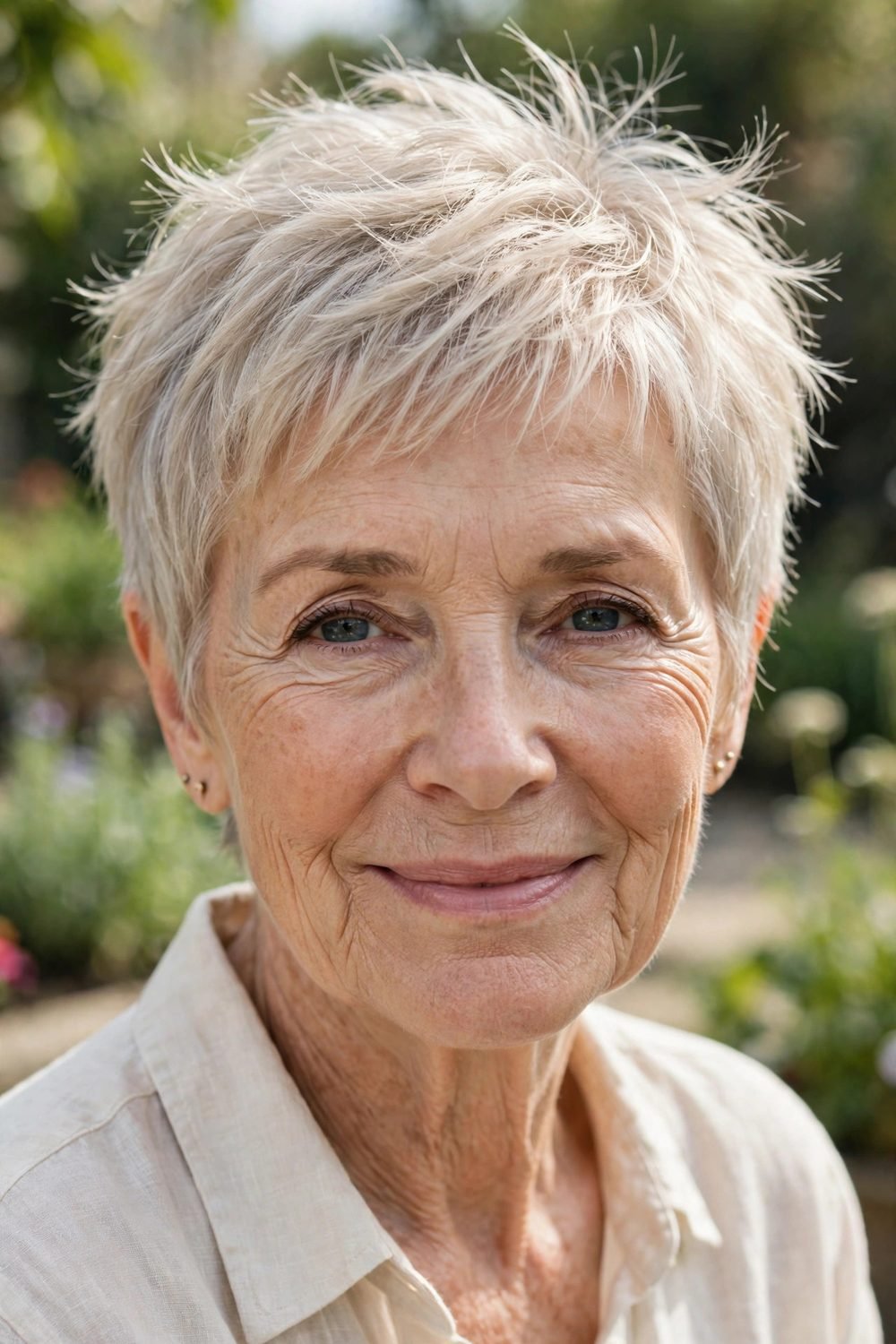
Fine hair does not need more product. It needs less weight.
Long layers on very fine hair drag it down and show the scalp. Short, wispy layers do the opposite. Each piece is light enough to lift away from its neighbour, so the hair reads fuller than it is. Ask the stylist to cut it dry if your hair is very fine, because wet fine hair stretches and ends up shorter than planned. At home, skip heavy oils and creams. A light mousse at the roots, worked in before drying, is often all this cut needs.
On very fine hair, short wispy layers lift. Long layers drag. Ask for short.
8. Curly Layered Crop That Lets Curls Spring
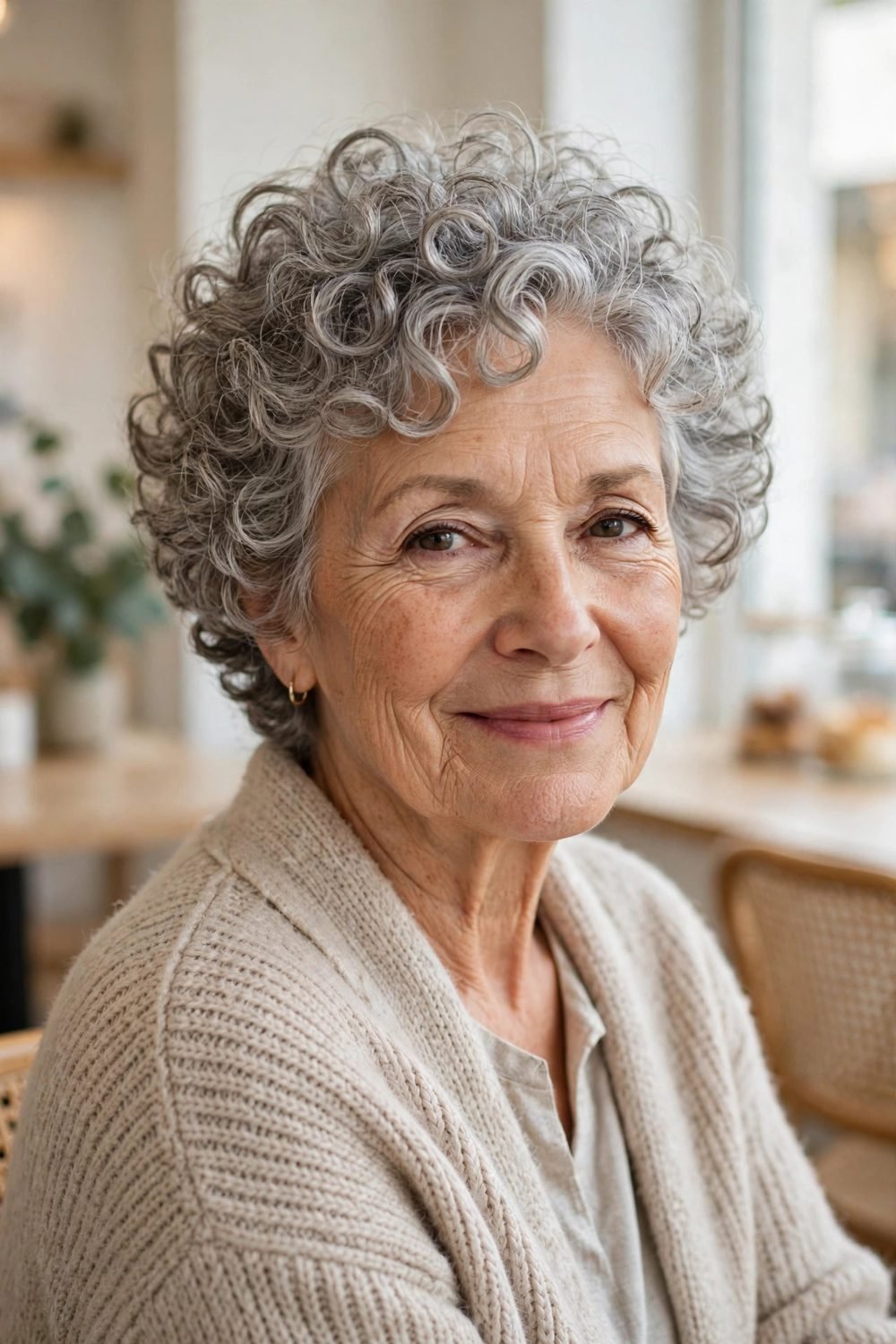
Curls cut in one solid length pull each other down.
Layering frees them. Short layers through the top let curls spring up and form their own round shape, while the sides are cut curl by curl so nothing sticks out like a shelf. This cut should be shaped dry or almost dry, because wet curls hang far longer than they live. Women with natural curl over 60 often find this is the first short cut that does not need a fight each morning. Shake it out, scrunch in a light curl cream, and leave it alone while it dries.
| Cut Wet In One Length | Cut Dry, Curl By Curl |
|---|---|
| Springs up short and uneven once it dries. | You see the real length and shape as you cut. |
| Heavy bottom, flat top, wide sides. | Lift on top, neat sides, round shape. |
9. Wavy Layered Bob With Bent, Lived In Ends
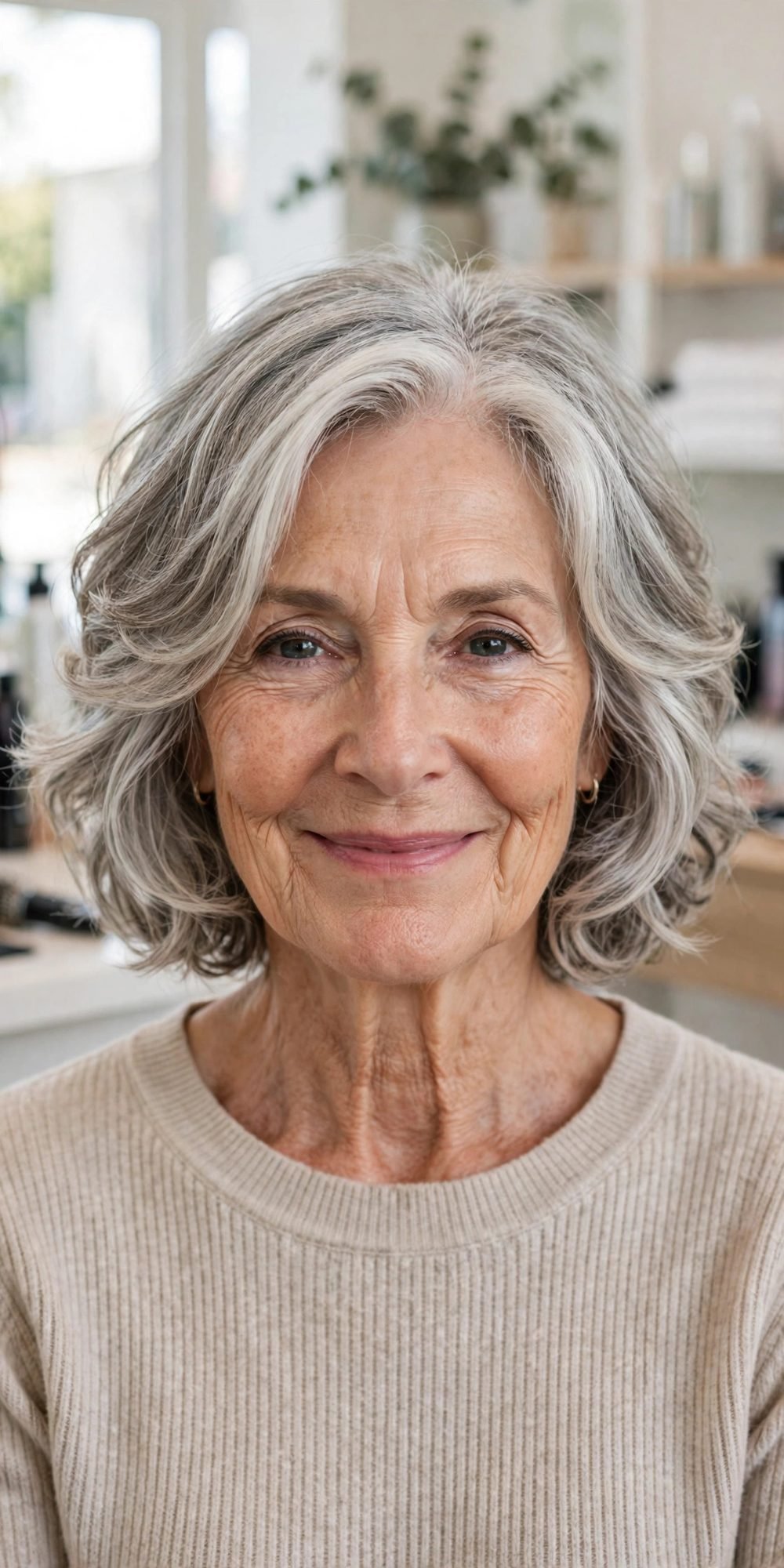
A little wave does more for movement than any brush can.
This bob is layered through the last few inches so the ends can bend instead of hanging straight and stiff. If your hair has a natural wave, the layers let it show. If your hair is straight, a large barrel or a simple bend with a flat iron gives the same effect in a few minutes. Keep the layers long at the front to frame the cheeks. Short front layers can jump up and look choppy. The back can go shorter, where the wave hides the joins well.
10. Layered Pixie Bob For Women Who Fear Going Too Short
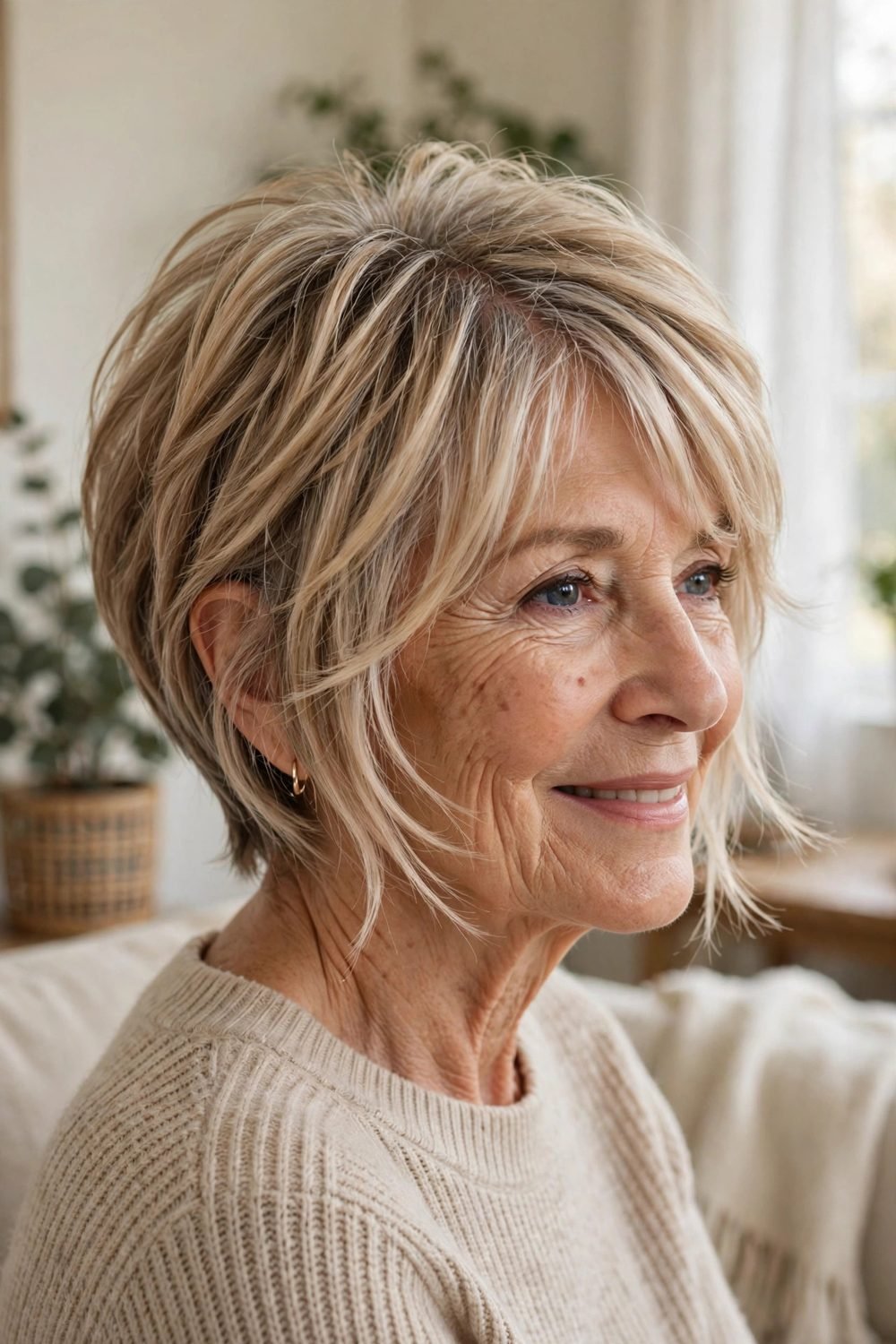
Not ready for a full pixie? This sits in between.
The back and crown are cut like a pixie, with layers that give lift, while the front and sides keep bob length around the ears and jaw. You get movement on top without giving up the soft frame around your face. It is also a kind way to grow out a pixie, or to test short hair before a bigger chop. Keep the front pieces point cut so they swing instead of hanging in two solid curtains. Many women start here and never go back to a plain bob.
⚠️ Watch Out
If the front is left too long and blunt, it drags the whole shape down. Ask for point cut, wispy front ends even if you keep the length.
11. Razor Cut Layered Shag, Kept Short
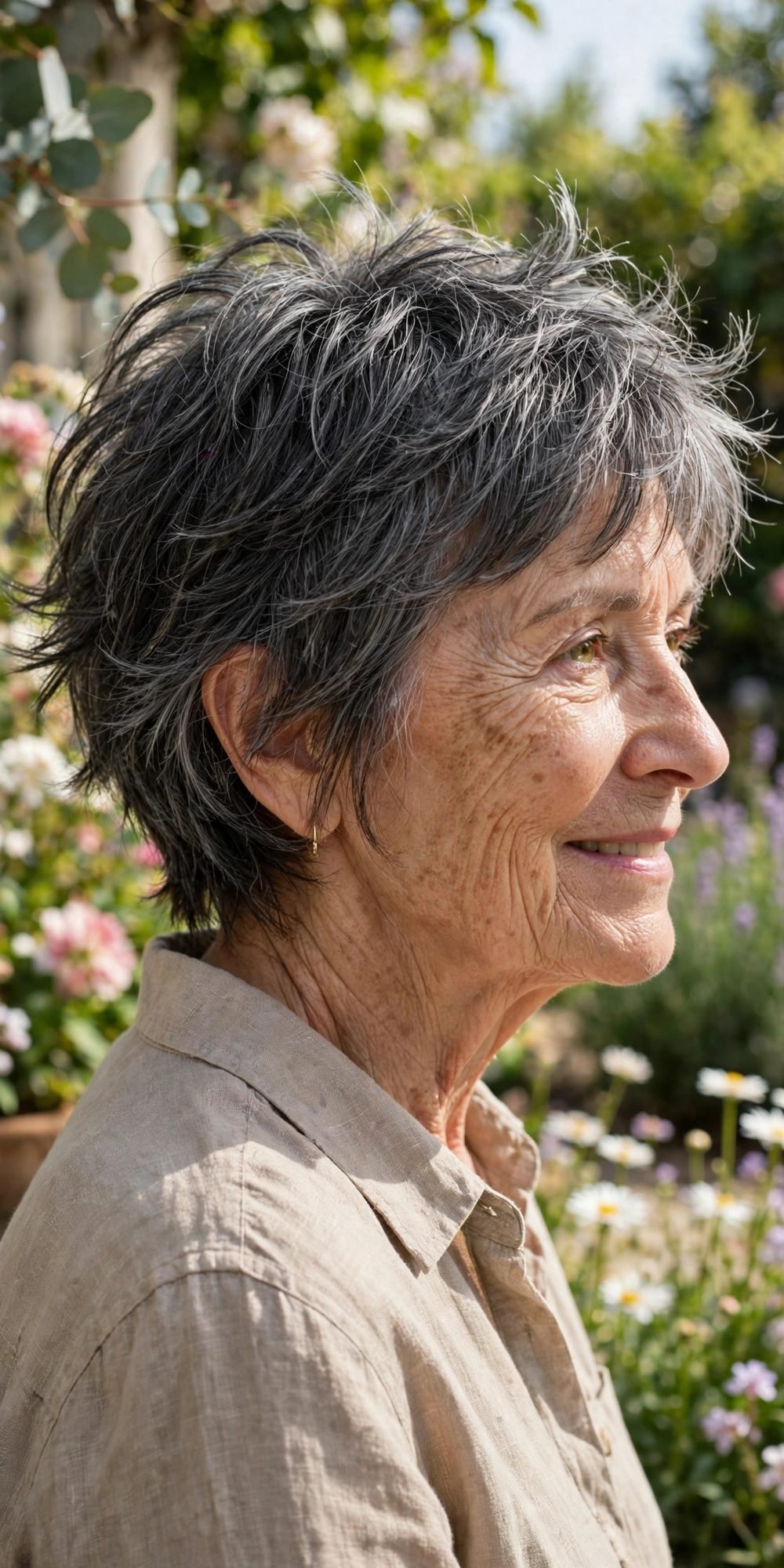
A razor does one thing scissors cannot. It thins the end of each strand to a fine point.
That fine point is why a razor cut shag moves so much. The layers are short on top, a little longer and flicked at the sides, with lots of soft separation. It suits medium to thick hair best, because the razor removes bulk as it cuts. On very fine hair a razor can make ends look stringy, so ask first. Style it by pushing pieces in different directions with your fingers. Neat and tidy is not the goal with this one.
12. Crown Lift Crop For A Flat Top
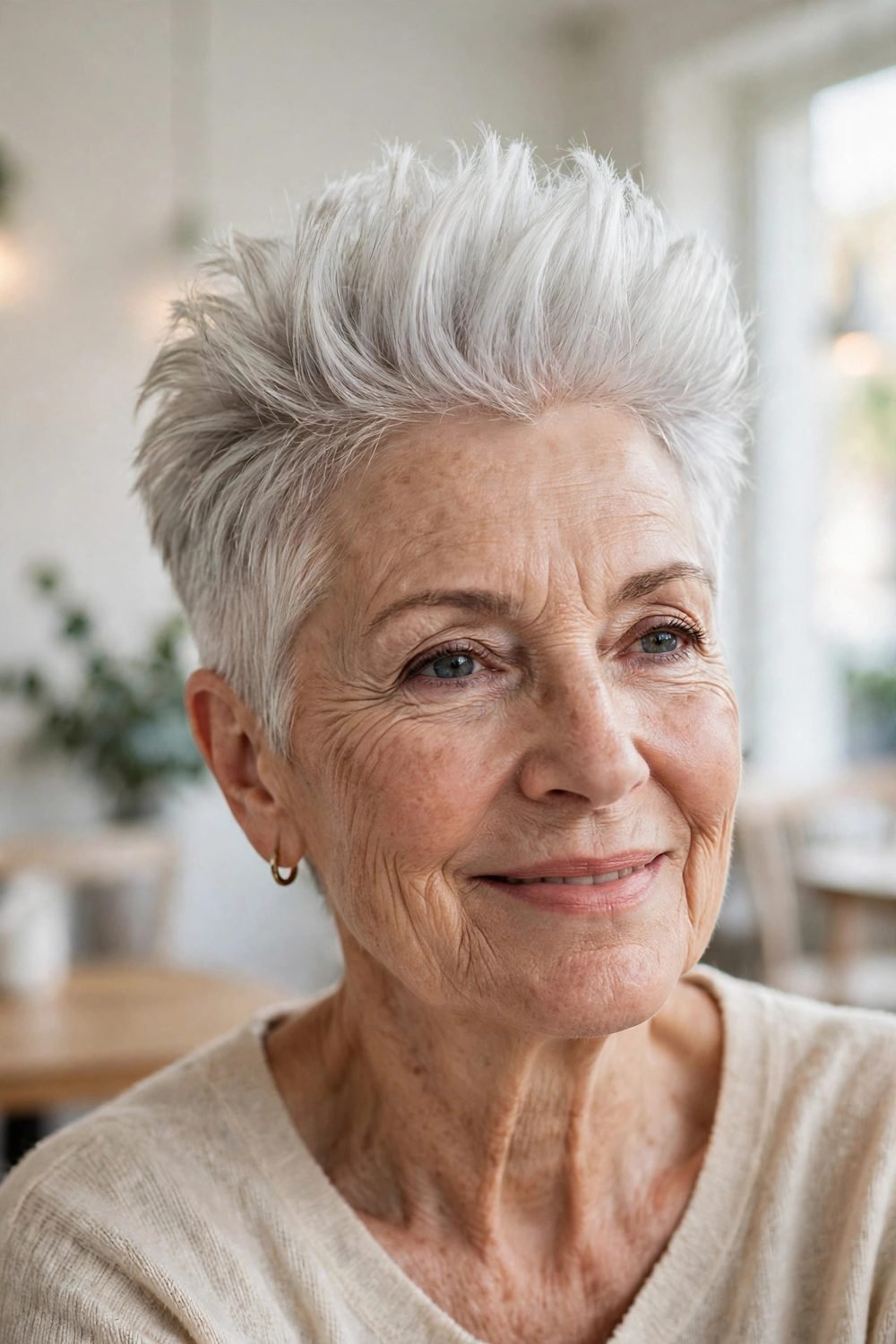
Some hair is not flat all over. It is flat in one stubborn spot on top.
This crop is built around that spot. Layers at the crown are cut shorter and a bit more upright than the rest, so they support each other and stand up instead of parting and lying down. The sides stay closer to the head, which makes the top look higher by contrast. Dry the crown against the way it wants to fall, then flip it back at the end. That small change in drying direction gives more lift than most sprays.
- ▸Dry the crown forward if it falls back, back if it falls forward.
- ▸Use a vent brush to lift roots while the hair is still warm.
- ▸Let it cool in the lifted position before you touch it.
13. Asymmetric Layers, Longer On One Side
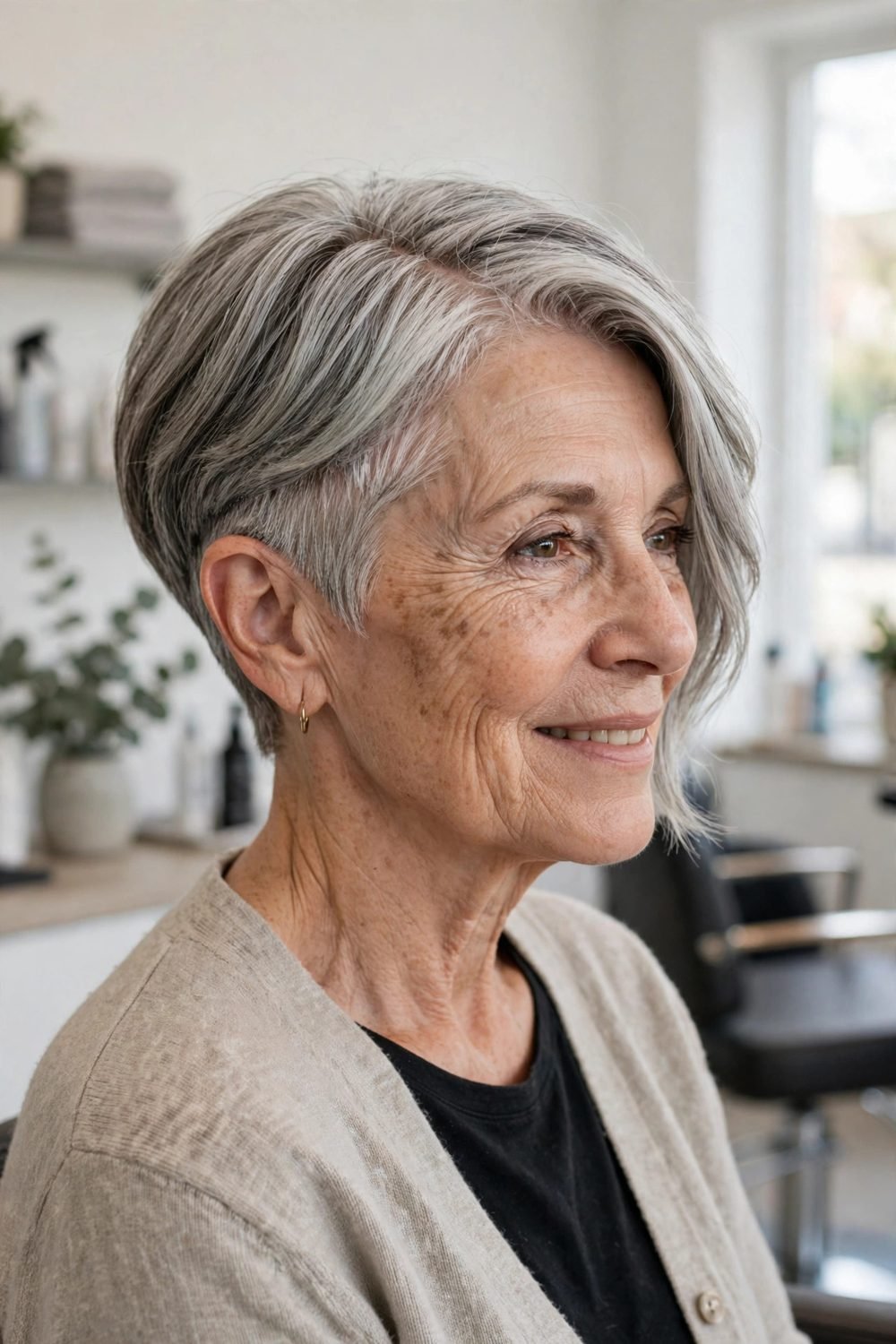
Symmetry can look static. One longer side keeps the eye moving.
One side is cut close around the ear, the other keeps layered length that sweeps down toward the chin. The contrast gives the cut energy, and the long side softens the jaw and cheek on that side. It is a strong choice for women who wear one statement earring or like a deep side part. The risk is upkeep. Asymmetry shows when it grows out, so plan a tidy up a week or two sooner than a standard crop. If that suits your routine, it is worth it.
Even sides, even length, and the whole cut sits still and looks a bit plain by week two.
One long sweeping side, one neat side. The shape has a clear direction and swing.
14. Face Framing Layers On A Short Base
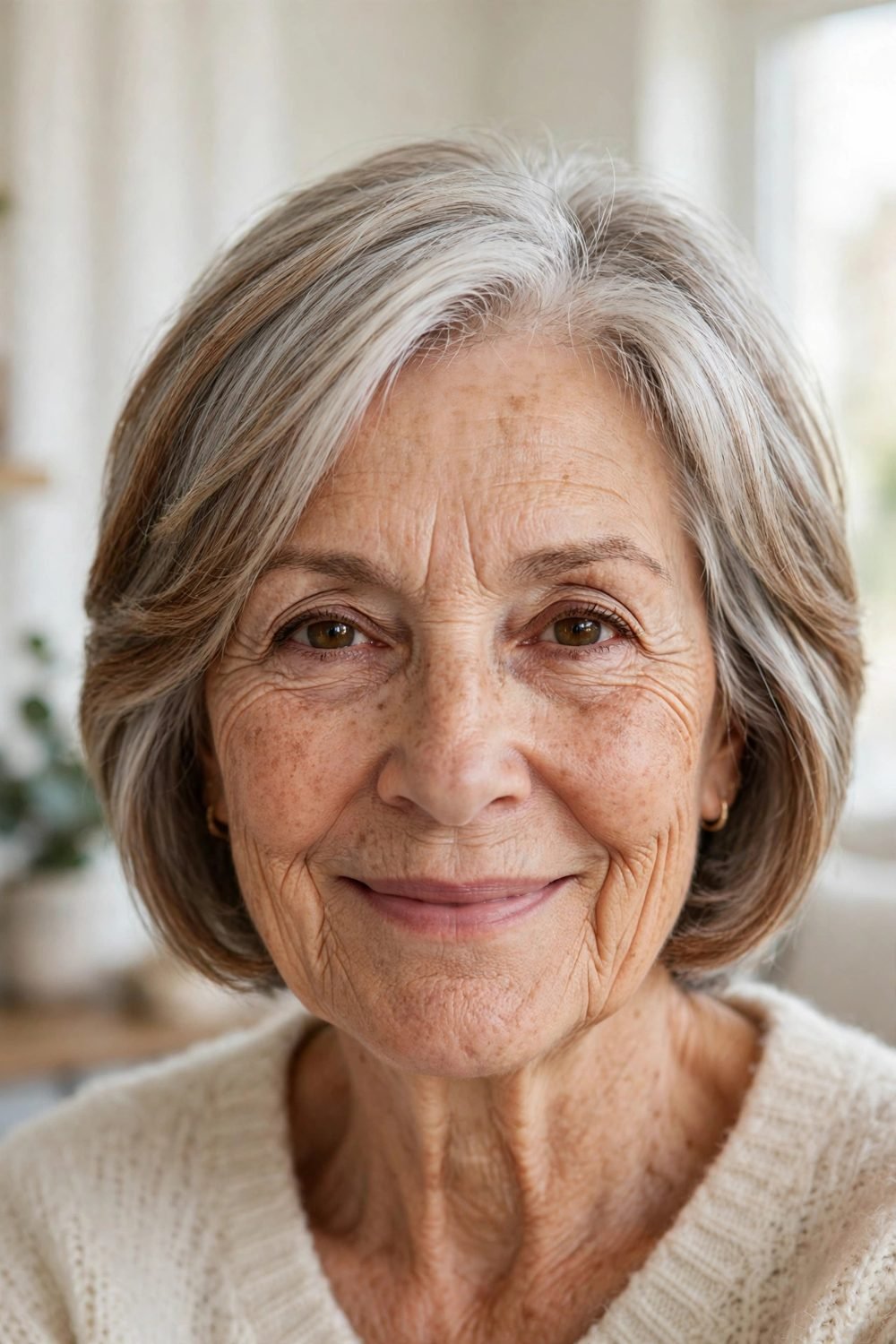
The layers that matter most are the ones people see first.
On a short base, two or three longer layered pieces around the face do the work of a much longer cut. They soften the cheekbones, break up lines around the mouth, and move when you talk and smile. Keep them starting at cheek level, not eye level, so they do not cut the face in half. This is a kind cut if your face has lost some fullness with age. The frame adds softness back without adding length all over the head.
Ask for the first framing layer to start at cheekbone level.
Keep two or three pieces only, so the frame stays light and soft.
Dry them curving toward the face, not away from it.
15. Layered Bixie With Flicked Ends
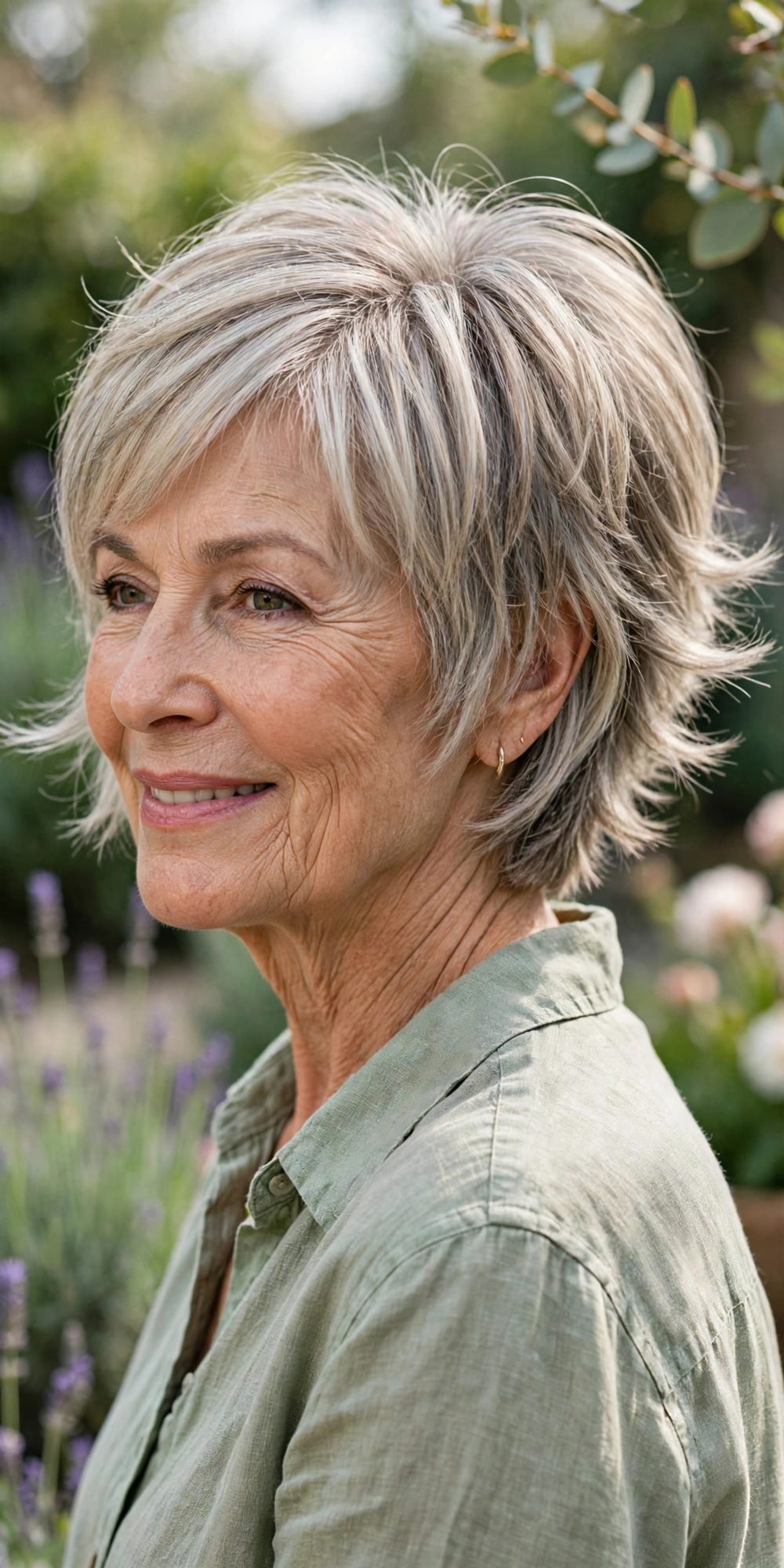
The bixie is half bob, half pixie, and the flick is what makes it fun.
Layers are cut so the ends turn out slightly instead of curling under into a round, set shape. That small outward turn gives the cut a light, modern feel and stops it looking like a helmet. It works on straight and wavy hair, and it is easy to refresh on day two. Mist the ends with water, pinch them outward, and let them dry while you make tea. If your ends are very fine, keep the flick subtle, or it can look wispy instead of playful.
Pinch ends outward on day two after a light water mist.
Keep layers through the ends so the flick can form.
Curling every end under into a tight round shape.
Hard spray, which freezes the flick and kills the swing.
16. Thick Hair Layers With Hidden Weight Removed
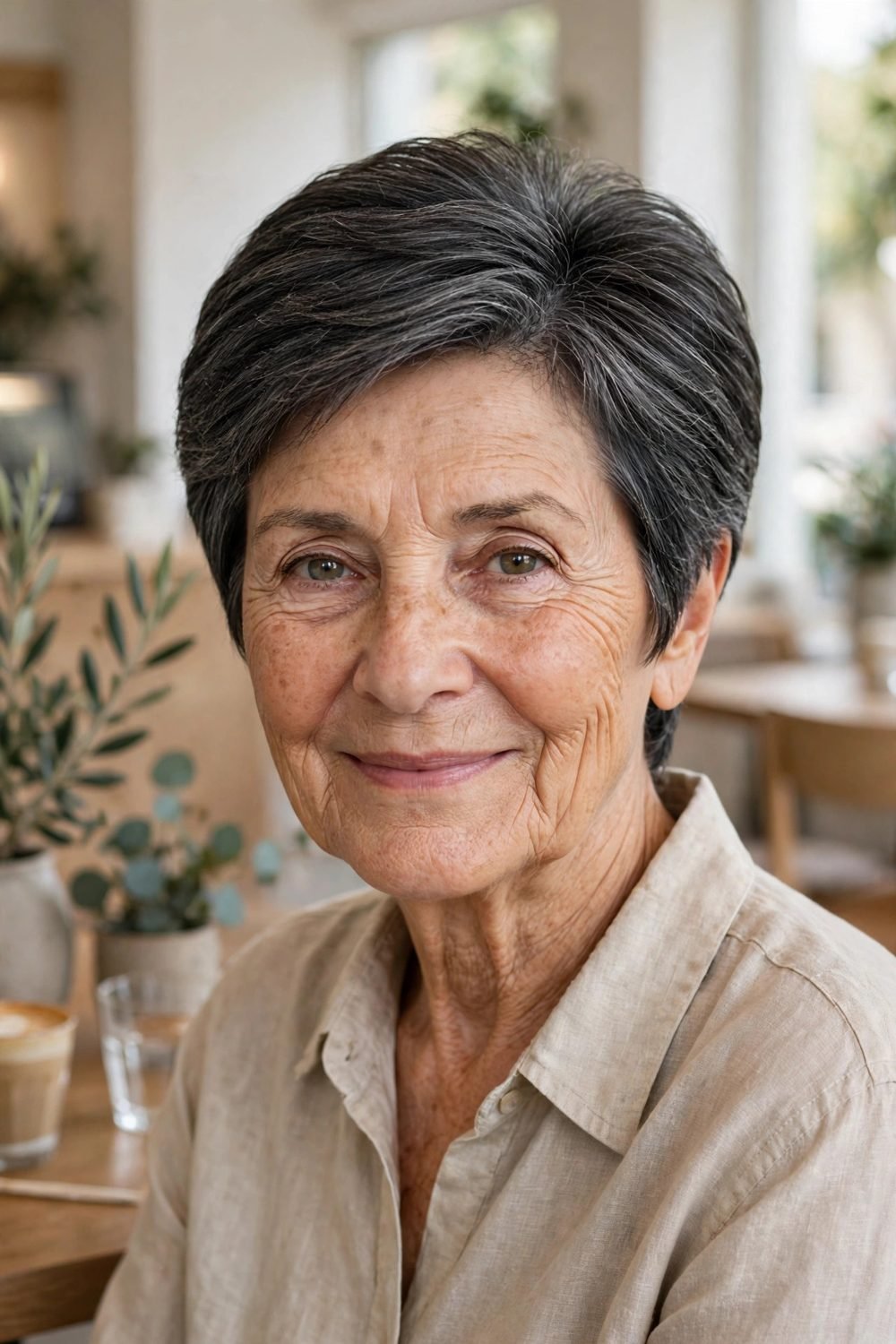
Thick hair over 60 has the opposite problem. It has plenty of volume, all in the wrong places.
It puffs at the sides, sits heavy on top, and still looks flat at the part. The fix is hidden layering. Weight is taken out from the middle layers underneath, while the top layer stays smooth and unbroken. The sides stop puffing, the top gains room to lift, and the whole head looks smaller and neater. Tell the stylist you want movement, not thin ends. There is a real difference, and a good stylist will thin the middle, not the edges.
Signs this is your cut
17. Silver Layered Crop That Shows Off Grey Texture
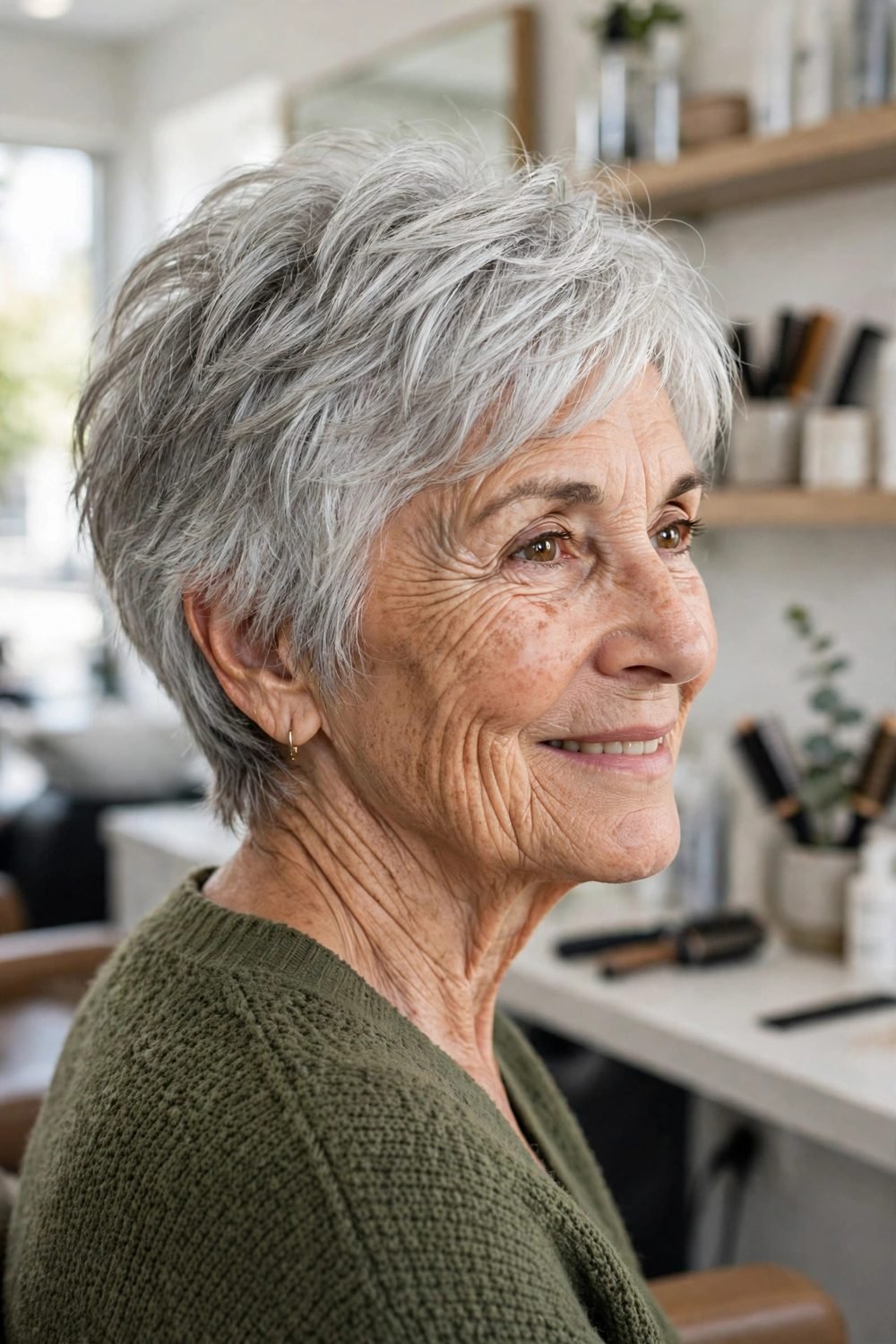
Grey hair has its own texture, and a flat cut fights it.
Silver strands are often a bit wiry and grow in mixed directions. Short layers work with that instead of against it. They let the mixed tones of silver, white, and soft grey show as natural dimension, the way highlights once did. Keep the layers choppy and the finish matte. Shine products on grey can look greasy fast. A purple shampoo once a week keeps the silver clear and bright if your water tends to leave a yellow cast on white hair.
Layered silver reads as dimension. One length silver reads as flat. Let the tones show.
18. Modern Soft Pageboy With Under Layers
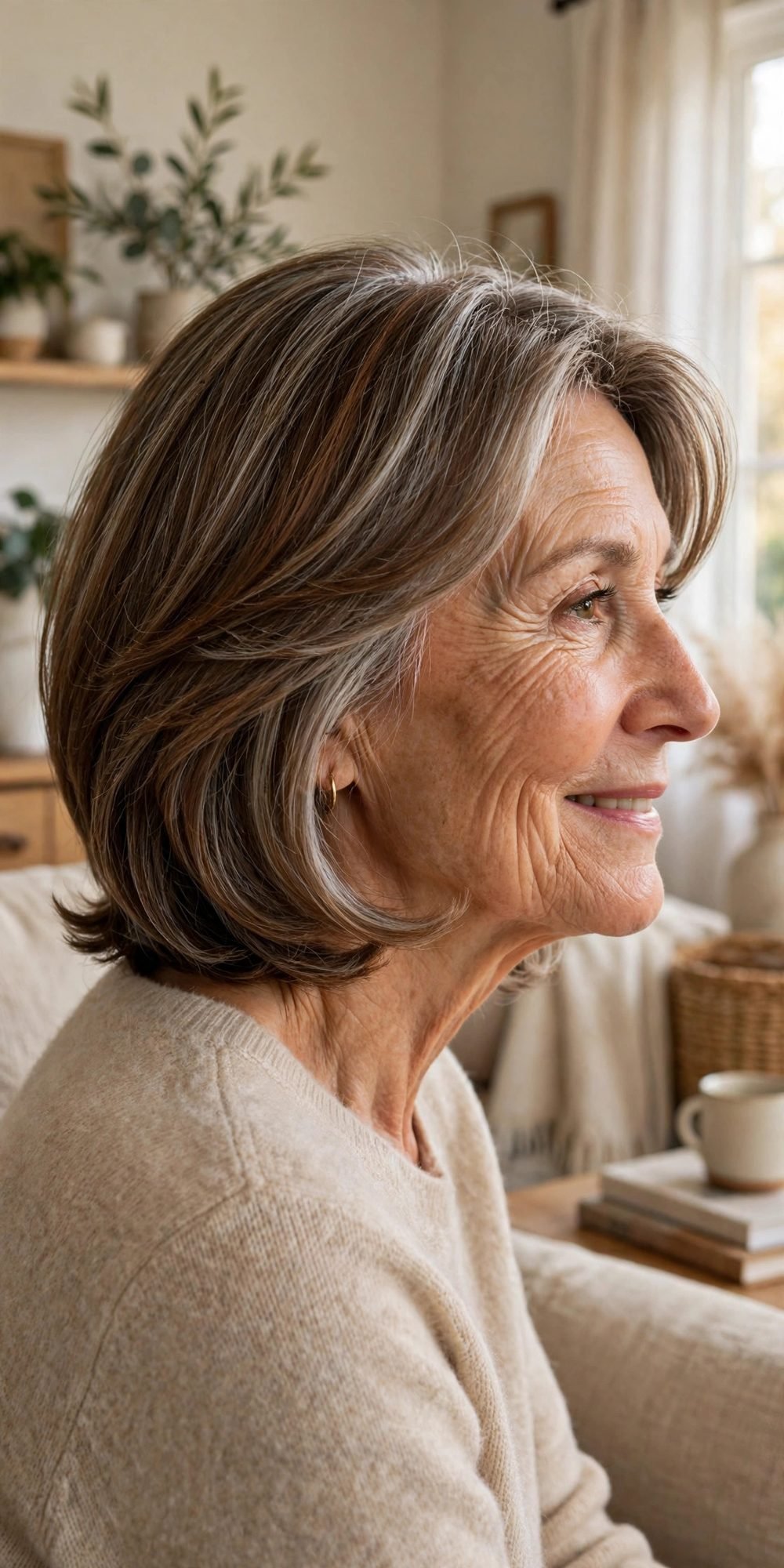
The pageboy has a bad name, mostly because of the stiff old version.
The modern one is different. The outer shape curves gently under at jaw length, while under layers are cut a touch shorter so the top layer can roll and move instead of sitting like a cap. The ends should look soft, not like a hard rolled edge. This suits straight, smooth hair and a neat, classic style. It also frames the jaw well in photos. Ask to see the back with a hand mirror before you leave, and check the curve is even on both sides.
| Old Stiff Pageboy | Modern Soft Pageboy |
|---|---|
| One length all over, hard rolled edge. | Shorter under layers let the top roll and move. |
| Sits like a cap and shows every flat spot. | Soft curved ends that swing at the jaw. |
19. Air Dry Layered Crop For Low Fuss Mornings
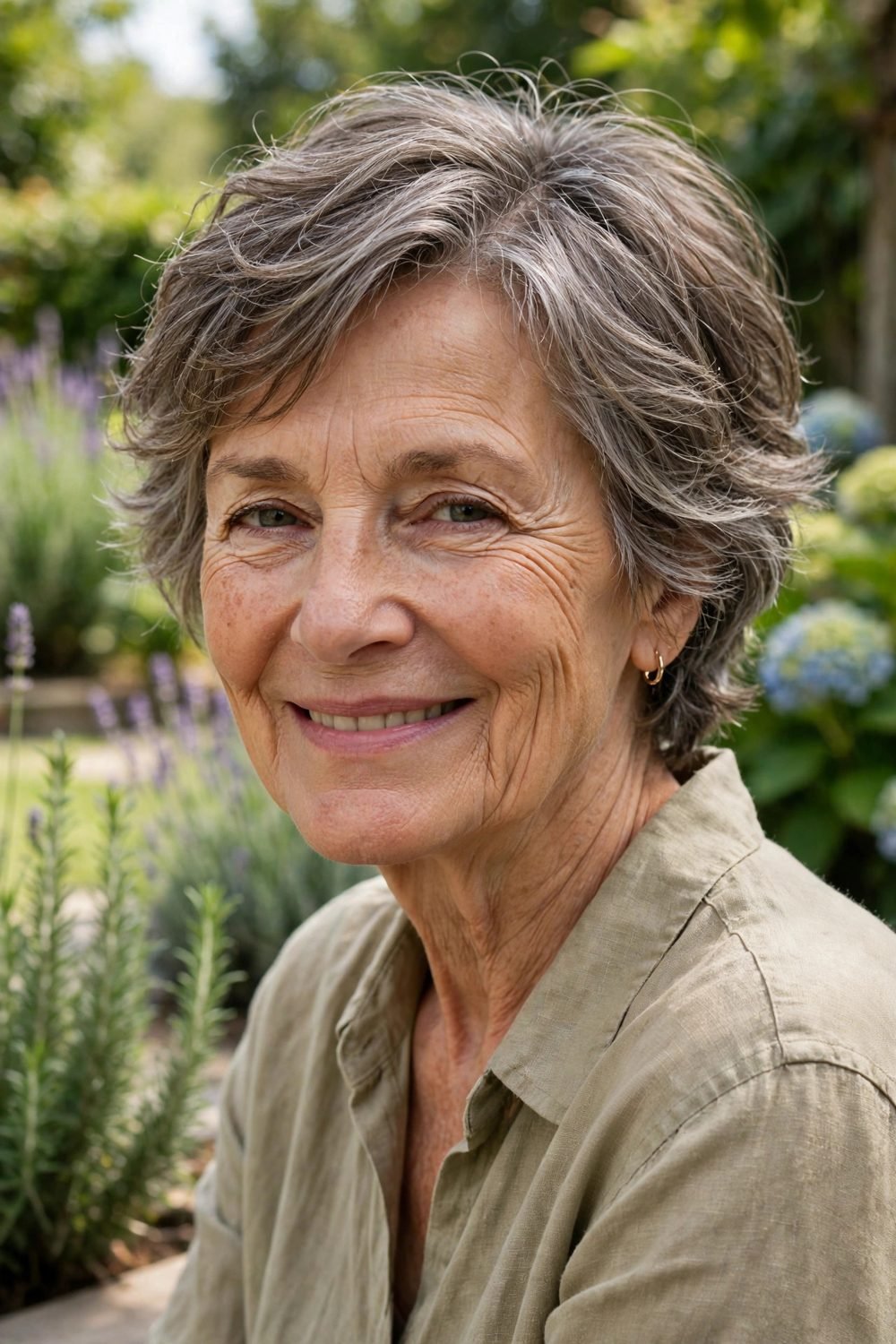
Some mornings, the dryer stays in the drawer. This cut is planned for those days.
Layers are cut to follow the way your hair falls on its own, including the part it chooses and the direction it grows at the front. Nothing is forced across or against its will, so it dries into a decent shape with no heat. The trade is honesty at the appointment. You have to tell the stylist you air dry most days, and show up with your hair dry and unstyled so they can see its real habits. Cuts planned on wet, pulled straight hair rarely air dry well.
20. Short Layers With A Long, Soft Fringe
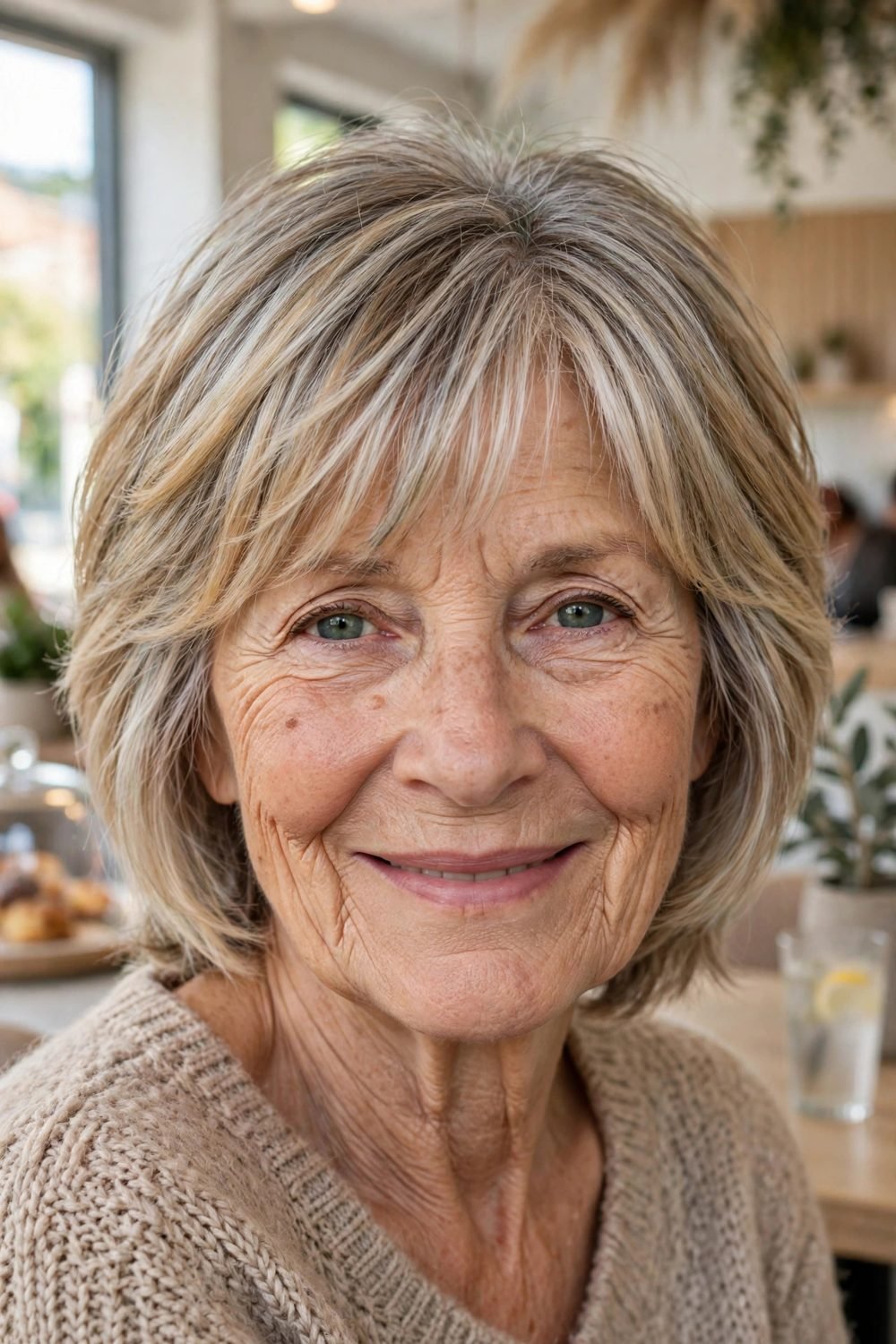
A fringe changes a short cut more than any other single choice.
Kept long and layered, it falls to the brows or just below and blends into the sides with no hard line. That soft edge covers forehead lines, which many women over 60 are pleased about, and it gives the front of the cut something to sweep and move. Keep it thin. A thick fringe takes too much hair from the top and leaves the crown sparse. If you wear reading glasses most of the day, ask for the fringe to end just above the frames so it does not rest on them.
📌 Good To Know
A fringe grows into your eyes in about three to four weeks. Many salons do a quick fringe trim between full cuts, often at low or no cost. Ask before you book.
21. Tousled Layered Crop With Piecey Ends
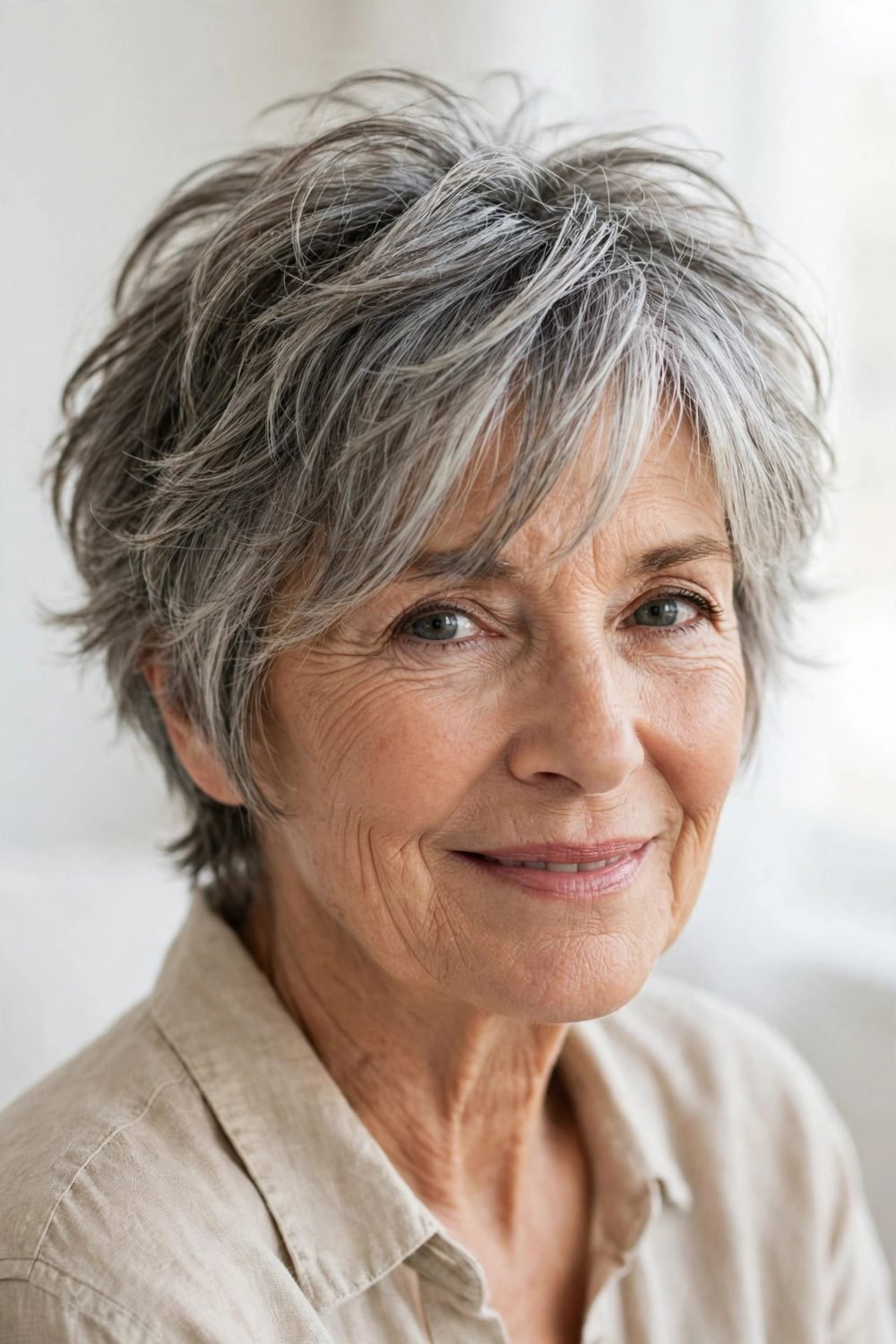
The last cut on the list is the most forgiving one here.
Layers are cut at mixed lengths and the ends are left piecey, with small separated sections instead of a smooth edge. That separation is what keeps a tousled crop from looking flat or, on the other side, frizzy and round. It takes two minutes with a tiny bit of cream on dry hair, pulling a few pieces down at the front and lifting a few at the crown. Bedhead helps this cut. Rain helps it less, so keep a small brush in your bag on wet days.
Final Thoughts
Movement is not about more styling. It is about where the weight sits. A good layered cut moves the weight up and off the ends, so the hair can lift, swing, and settle back on its own.
Pick the one or two cuts here that match your hair as it is now, fine, thick, curly, or silver, and take the photos to your appointment. Good layered short haircuts over 60 should still look like themselves on a plain Tuesday morning, with no salon lights and no stylist standing behind you. Save this list on Pinterest for your next salon visit, so the photos are in your hand when you sit down in the chair.